




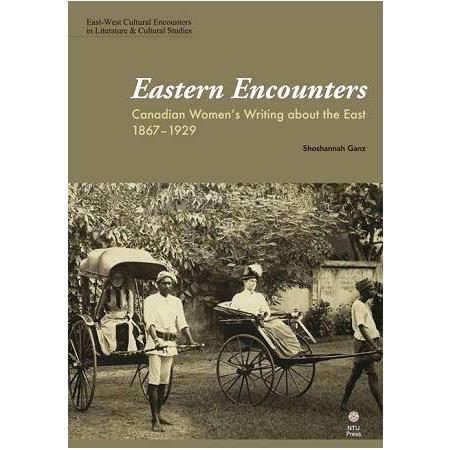
Eastern Encounters: Canadian Women``s Writing about the East 1867-1929





活動訊息
全館滿$1,200送150點金幣,4月歡慶兒童節,童書、玩具、文具滿1000元再送200點金幣!
內容簡介
Eastern Encounters releases early Canadian women writers from a simple focus on autobiography and racial politics and interrogates their specific and sophisticated Asian influences. With a compelling reconstruction of historical context, Ganz has created perhaps the first book in a much-needed series that will revisit Canadian nationalism through the important cultural exchanges she examines. Though shaped with an Asian readership in mind, Eastern Encounters is an important work for all who wish to challenge the notion that Judeo-Christian traditions almost exclusively shaped early Canadian discourse.
目錄
Dedication
Introduction
1 Sara Jeannette Duncan, Mrs. Howard Vincent and Ellen Agnes Bilbrough: Canadian Travel Writing About Japan, China, and India
2 A Fictional Remembering of India? Anna Leonowens’s Travel Writing
3 The Eastern Threat to Women’s Enfranchisement in Nellie McClung’s Purple Springs
4 Literary Fake or Translating Genius? Onoto Watanna’s Translations of Japanese Literary Motifs from The Tale of Genji in Tama (1910) and The Honourable Miss Moonlight (1912)
5 The Teachings of the Compassionate Beck: Buddhist Philosophy, ilgrimage, and The House of Fulfilment
Postscript
Acknowledgements
Previously Published
Works Consulted
Index
Introduction
1 Sara Jeannette Duncan, Mrs. Howard Vincent and Ellen Agnes Bilbrough: Canadian Travel Writing About Japan, China, and India
2 A Fictional Remembering of India? Anna Leonowens’s Travel Writing
3 The Eastern Threat to Women’s Enfranchisement in Nellie McClung’s Purple Springs
4 Literary Fake or Translating Genius? Onoto Watanna’s Translations of Japanese Literary Motifs from The Tale of Genji in Tama (1910) and The Honourable Miss Moonlight (1912)
5 The Teachings of the Compassionate Beck: Buddhist Philosophy, ilgrimage, and The House of Fulfilment
Postscript
Acknowledgements
Previously Published
Works Consulted
Index
序/導讀
Introduction (Excerpt)
Canadian Nationalism
The question of what constitutes Canadian identity and the closely related question of what represents a Canadian literary tradition and history have been at the core of the activities of Canadian literary critics and writers since the nascence of the Canadian nation with, and even before, confederation in 1867. In the early pre- and post-confederation years, a number of poets and writers were searching for Canadian topics and a poetry that could be celebrated as uniquely Canadian. Satirizing this struggle in the April 27, 1929 issue of the McGill Fortnightly Review, Montreal poet and critic F. R. Scott (1899–1985) published his much-quoted poetic critique of the Canadian Authors’ Association, an organization founded in 1921 “to promote the interests of Canadian writers” (Bentley 3). “The Canadian Authors Meet” refers back to the poets collectively known as the Confederation poets, “[Bliss] Carman, [Archibald] Lampman, [Sir Charles G. D.] Roberts, [William Wilfred] Campbell, [Duncan Campbell] Scott” (line 10). The poem concludes by summing up the state of establishment Canadian poetry as follows: “O Canada, O Canada, Oh can / A day go by without new authors springing / To paint the native maple, and to plan / More ways to set the selfsame welkin ringing?” (lines 21–24). Against this background of nationalist fervour encapsulated by declarations of “O Canada” and the “native maple,” F. R. Scott and other modernist poets were attempting to develop and define a more rigorous, experimental, and particularly international poetry—a poetry A. J. M. Smith (1902–1980) would call “cosmopolitan” in the Preface to the 1943 anthology The Book of Canadian Poetry (1943; rev. 1948, 1957). The modernist poetic and political opposition to the rhetoric of the local and national obsessions that had kept the “selfsame welkin ringing” for the first fifty years of Canadian literary history marked a shift in Canadian literature and culture.
While the above is a standard introduction to Canadian nationalist topics and values and the cosmopolitan perspective, as introduced by male critics/poets such as A. J. M. Smith and F. R. Scott, there also exists a parallel and somewhat different poetic history that chronicles not the “maple leaf forever,” but subtle expressions of Eastern influence and sensibility. The all-but-forgotten Canadian modernist poet Louise Morey Bowman (1882–1944), hailed in her day by American modernist poets, questions colonial presence in India in poems such as “Garden in Agra,” which she begins by asking, “Cool-blossomed English garden! What wide fate / Set you in burning breathless India?” (lines 1–2). The poem was originally published in Canadian Author’s Association Poetry Year Book 1926–1927 and republished by Wanda Campbell as part of her early Canadian women’s poetry recovery project in Hidden Rooms (2000). Bowman likewise works in the Japanese form of Hokku, showing—like many of the American modernist poets, and well ahead of her male Canadian modernist counterparts—the influence of Japanese poetics on the sparseness and form of modernist poetry. Part of Dream Tapestries (1924), “Twelve Hokku on a Canadian Theme” and “Life Sequence (In the Hokku Manner)” are republished in Campbell’s Hidden Rooms as early examples of the Japanese influence on Canadian women’s poetry. Bowman, among others, illustrates how women’s voices and the influence of the East on Canadian modernism and the Canadian literary tradition have been, as Campbell’s title clearly shows, hidden and excluded from Canadian history and the Canadian literary canon. This book is dedicated to the study of Canadian prose fiction and non-fiction. However, like Wanda Campbell’s anthology of early Canadian women’s poetry, this project is an attempt to recover women’s voices, and particularly those Canadian women influenced by Japan, India, and China.
The study of Canadian literature as a field
Canadian Nationalism
The question of what constitutes Canadian identity and the closely related question of what represents a Canadian literary tradition and history have been at the core of the activities of Canadian literary critics and writers since the nascence of the Canadian nation with, and even before, confederation in 1867. In the early pre- and post-confederation years, a number of poets and writers were searching for Canadian topics and a poetry that could be celebrated as uniquely Canadian. Satirizing this struggle in the April 27, 1929 issue of the McGill Fortnightly Review, Montreal poet and critic F. R. Scott (1899–1985) published his much-quoted poetic critique of the Canadian Authors’ Association, an organization founded in 1921 “to promote the interests of Canadian writers” (Bentley 3). “The Canadian Authors Meet” refers back to the poets collectively known as the Confederation poets, “[Bliss] Carman, [Archibald] Lampman, [Sir Charles G. D.] Roberts, [William Wilfred] Campbell, [Duncan Campbell] Scott” (line 10). The poem concludes by summing up the state of establishment Canadian poetry as follows: “O Canada, O Canada, Oh can / A day go by without new authors springing / To paint the native maple, and to plan / More ways to set the selfsame welkin ringing?” (lines 21–24). Against this background of nationalist fervour encapsulated by declarations of “O Canada” and the “native maple,” F. R. Scott and other modernist poets were attempting to develop and define a more rigorous, experimental, and particularly international poetry—a poetry A. J. M. Smith (1902–1980) would call “cosmopolitan” in the Preface to the 1943 anthology The Book of Canadian Poetry (1943; rev. 1948, 1957). The modernist poetic and political opposition to the rhetoric of the local and national obsessions that had kept the “selfsame welkin ringing” for the first fifty years of Canadian literary history marked a shift in Canadian literature and culture.
While the above is a standard introduction to Canadian nationalist topics and values and the cosmopolitan perspective, as introduced by male critics/poets such as A. J. M. Smith and F. R. Scott, there also exists a parallel and somewhat different poetic history that chronicles not the “maple leaf forever,” but subtle expressions of Eastern influence and sensibility. The all-but-forgotten Canadian modernist poet Louise Morey Bowman (1882–1944), hailed in her day by American modernist poets, questions colonial presence in India in poems such as “Garden in Agra,” which she begins by asking, “Cool-blossomed English garden! What wide fate / Set you in burning breathless India?” (lines 1–2). The poem was originally published in Canadian Author’s Association Poetry Year Book 1926–1927 and republished by Wanda Campbell as part of her early Canadian women’s poetry recovery project in Hidden Rooms (2000). Bowman likewise works in the Japanese form of Hokku, showing—like many of the American modernist poets, and well ahead of her male Canadian modernist counterparts—the influence of Japanese poetics on the sparseness and form of modernist poetry. Part of Dream Tapestries (1924), “Twelve Hokku on a Canadian Theme” and “Life Sequence (In the Hokku Manner)” are republished in Campbell’s Hidden Rooms as early examples of the Japanese influence on Canadian women’s poetry. Bowman, among others, illustrates how women’s voices and the influence of the East on Canadian modernism and the Canadian literary tradition have been, as Campbell’s title clearly shows, hidden and excluded from Canadian history and the Canadian literary canon. This book is dedicated to the study of Canadian prose fiction and non-fiction. However, like Wanda Campbell’s anthology of early Canadian women’s poetry, this project is an attempt to recover women’s voices, and particularly those Canadian women influenced by Japan, India, and China.
The study of Canadian literature as a field
配送方式
-
台灣
- 國內宅配:本島、離島
-
到店取貨:
 不限金額免運費



-
海外
- 國際快遞:全球
-
港澳店取:


訂購/退換貨須知
加入金石堂 LINE 官方帳號『完成綁定』,隨時掌握出貨動態:


提醒您!!
金石堂及銀行均不會請您操作ATM! 如接獲電話要求您前往ATM提款機,請不要聽從指示,以免受騙上當!
退換貨須知:
**提醒您,鑑賞期不等於試用期,退回商品須為全新狀態**
-
依據「消費者保護法」第19條及行政院消費者保護處公告之「通訊交易解除權合理例外情事適用準則」,以下商品購買後,除商品本身有瑕疵外,將不提供7天的猶豫期:
- 易於腐敗、保存期限較短或解約時即將逾期。(如:生鮮食品)
- 依消費者要求所為之客製化給付。(客製化商品)
- 報紙、期刊或雜誌。(含MOOK、外文雜誌)
- 經消費者拆封之影音商品或電腦軟體。
- 非以有形媒介提供之數位內容或一經提供即為完成之線上服務,經消費者事先同意始提供。(如:電子書、電子雜誌、下載版軟體、虛擬商品…等)
- 已拆封之個人衛生用品。(如:內衣褲、刮鬍刀、除毛刀…等)
- 若非上列種類商品,均享有到貨7天的猶豫期(含例假日)。
- 辦理退換貨時,商品(組合商品恕無法接受單獨退貨)必須是您收到商品時的原始狀態(包含商品本體、配件、贈品、保證書、所有附隨資料文件及原廠內外包裝…等),請勿直接使用原廠包裝寄送,或於原廠包裝上黏貼紙張或書寫文字。
- 退回商品若無法回復原狀,將請您負擔回復原狀所需費用,嚴重時將影響您的退貨權益。


商品評價