




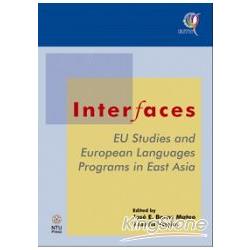
Interfaces:EU Studies and European Languages Programs in East Asia





活動訊息



內容簡介
Partly due to the European Union’s insistent and successful policies on pluriculturalism and plurilinguism, there have recently been voices challenging the prevalent and practical consensus in East Asian educational policies that saw English as the only tool for international communication. Their argument emphasizes that when dealing with countries that are sellers of goods and services, knowledge of the languages and cultures of prospective customers is essential. They also acknowledge the strong correlation between economic and political power and the extensive study of foreign languages.
This book takes a stand on important aspects of this multifaceted argument. The first part addresses the meaning of European Studies, an issue of great relevance now that Europe, in sharp contrast to East Asia, is experiencing a severe economic recession. The second part presents formulas that have been employed by institutions in East Asia in attempting to satisfy the needs of students and scholars for advanced knowledge of European languages as they strive for answers to their research questions on Europe. The final part deals with the difficult issue of linking the syllabuses of European Studies and foreign languages.
The consensus that emerges from the scholars contributing to this book points towards rejecting the addition of large scale resources for the creation of successful programs in outstanding universities. Instead, it seems preferable to maximize existing resources by creating conditions that allow ad-hoc cross campus cooperation, and foster mobility of students through exchange programs so that they can have their own European experience.
This book takes a stand on important aspects of this multifaceted argument. The first part addresses the meaning of European Studies, an issue of great relevance now that Europe, in sharp contrast to East Asia, is experiencing a severe economic recession. The second part presents formulas that have been employed by institutions in East Asia in attempting to satisfy the needs of students and scholars for advanced knowledge of European languages as they strive for answers to their research questions on Europe. The final part deals with the difficult issue of linking the syllabuses of European Studies and foreign languages.
The consensus that emerges from the scholars contributing to this book points towards rejecting the addition of large scale resources for the creation of successful programs in outstanding universities. Instead, it seems preferable to maximize existing resources by creating conditions that allow ad-hoc cross campus cooperation, and foster mobility of students through exchange programs so that they can have their own European experience.
目錄
CONTENTS
Contributors vii
Foreword ix
Introduction xi
Part One: Building EU and European Studies Programs
1. A Historical and Academic Review of EU Studies in Taiwan
HUNGDAH SU 5
2. Understanding Europe – Understanding Yourself:
European Studies in Hong Kong
HANS WERNER HESS 33
3. Keeping in Touch with Europe: European Studies at Macau
ALEKSANDAR PAVKOVIC 63
4. European Studies on China’s Transformation:
A Critical Assessment
ROLAND VOGT 85
Part Two: The Role of the European Languages (EUL) Programs
5. The Formation of the European Languages Division
in the DFLL at NTU and the Challenges for the Future
JOSE EUGENIO BORAO MATEO 115
6. Foreign Language Learning in Higher Education in Singapore:
With a Special Focus on the European Language Curriculums
of the National University of Singapore
WAI MENG CHAN 147
7. The Decline of European Language Education in Korea and
the Rise of English
ANDREW E. FINCH 177
Part Three: European Languages Interacting with European and EU Studies
8. “Language for Specific Purposes” and European Studies:
Chances and Dilemmas
CHUNG HENG SHEN 209
9. The Partnership between Culture and Tourism:
What Can Taiwan Learn from Europe and How?
YI-DE LIU 225
10. Language and Culture: The Contribution of
European Classical Languages
VASSILIS VAGIOS 243
Contributors vii
Foreword ix
Introduction xi
Part One: Building EU and European Studies Programs
1. A Historical and Academic Review of EU Studies in Taiwan
HUNGDAH SU 5
2. Understanding Europe – Understanding Yourself:
European Studies in Hong Kong
HANS WERNER HESS 33
3. Keeping in Touch with Europe: European Studies at Macau
ALEKSANDAR PAVKOVIC 63
4. European Studies on China’s Transformation:
A Critical Assessment
ROLAND VOGT 85
Part Two: The Role of the European Languages (EUL) Programs
5. The Formation of the European Languages Division
in the DFLL at NTU and the Challenges for the Future
JOSE EUGENIO BORAO MATEO 115
6. Foreign Language Learning in Higher Education in Singapore:
With a Special Focus on the European Language Curriculums
of the National University of Singapore
WAI MENG CHAN 147
7. The Decline of European Language Education in Korea and
the Rise of English
ANDREW E. FINCH 177
Part Three: European Languages Interacting with European and EU Studies
8. “Language for Specific Purposes” and European Studies:
Chances and Dilemmas
CHUNG HENG SHEN 209
9. The Partnership between Culture and Tourism:
What Can Taiwan Learn from Europe and How?
YI-DE LIU 225
10. Language and Culture: The Contribution of
European Classical Languages
VASSILIS VAGIOS 243
序/導讀
序
(under the limitations inherent in any institution and allowing for the lack of specific EUL departments) under the understanding among the teachers that they are creating comprehensive programs, making space for the so-called “less common taught languages”, which nevertheless are rich in cultural connectivity.
When researching Foreign Languages teaching policies, the creation of syllabi and the establishment of synergies between complementary areas of learning – in other words, the purpose of this book – it is difficult to escape the simple but necessary approach of offering reports of the situation in a given school or country, and this difficulty loomed as we were compiling this book. Nevertheless, we have tried consciously to go beyond this approach, because statistics only offer trends, not the reasons why a particular design works or not, or what its process of consolidation and renewal is. So we have deliberately attempted to set a new approach: to focus on when and how syllabus constructions can link European languages and European studies.
The first part of this book considers the meaning of European Studies, an issue which becomes especially relevant now that Europe, in sharp contrast with the situation in East Asia, is experiencing a severe economic recession. The purpose is to address the question of how European studies can or should adapt once more to a new political, economic, social and cultural environment. It seems that those studies experienced a decline of interest in regions like Japan, Korea, Hong Kong or Macao, and the authors of the book propose a range of different explanations. Sometimes the reason is that the relevant programs lack definition or practical application, and when this problem is compounded by high fees, the situation results in cases like Macao in a high percentage of non-completion, since students are tempted to start working before graduation. In other cases the decline can be attributed to the perception among students that the EU is changing from integration to disintegration, that Europe is in a process of re-construction, and that it is difficult to see what the new Europe will look like or stand for. Certainly this perception is further strengthened by the fact that Europe has been presented as a series of disasters, rather than as 70 years of peace; as conflict rather than as ways of ritualizing conflict, despite the fact that this latter approach can be very well understood in an East Asia of societies shaped by the Confucian principles of social harmony.
Integration is most commonly chosen as a focal point in European Studies when a program concentrates on recent political affairs. Yet, there is a great multiplicity of possible approaches, like – to mention just an example – the dialogues between government and civil society. Jacques Delors, former president of the European Commission, broadened the vision of Europe saying: “The economic success of Europe depends on a triangle, composed by the competence, which works as stimulus of the economy, the cooperation, which enforces it, and the solidarity, that unites”.
Solidarity becomes more prominent when one attempts to understand the diversity of cultures in Europe, for which communication through language instruction – the topic of the second part of this book – seems to be essential. Do the students and scholars need advanced knowledge of EUL to answer questions on Europe? In the mind of the contributors of this book there are even more specific questions. What is the identity of Europe? What do Europeans say about themselves? What is the understanding of human nature which forms the foundation of the European legal system? Is there any European tradition as an intellectual phenomenon? Many programs rely on English books to approach these questions, but they may only offer a shallow knowledge of the topic for graduate students aiming to write their thesis on specific countri
(under the limitations inherent in any institution and allowing for the lack of specific EUL departments) under the understanding among the teachers that they are creating comprehensive programs, making space for the so-called “less common taught languages”, which nevertheless are rich in cultural connectivity.
When researching Foreign Languages teaching policies, the creation of syllabi and the establishment of synergies between complementary areas of learning – in other words, the purpose of this book – it is difficult to escape the simple but necessary approach of offering reports of the situation in a given school or country, and this difficulty loomed as we were compiling this book. Nevertheless, we have tried consciously to go beyond this approach, because statistics only offer trends, not the reasons why a particular design works or not, or what its process of consolidation and renewal is. So we have deliberately attempted to set a new approach: to focus on when and how syllabus constructions can link European languages and European studies.
The first part of this book considers the meaning of European Studies, an issue which becomes especially relevant now that Europe, in sharp contrast with the situation in East Asia, is experiencing a severe economic recession. The purpose is to address the question of how European studies can or should adapt once more to a new political, economic, social and cultural environment. It seems that those studies experienced a decline of interest in regions like Japan, Korea, Hong Kong or Macao, and the authors of the book propose a range of different explanations. Sometimes the reason is that the relevant programs lack definition or practical application, and when this problem is compounded by high fees, the situation results in cases like Macao in a high percentage of non-completion, since students are tempted to start working before graduation. In other cases the decline can be attributed to the perception among students that the EU is changing from integration to disintegration, that Europe is in a process of re-construction, and that it is difficult to see what the new Europe will look like or stand for. Certainly this perception is further strengthened by the fact that Europe has been presented as a series of disasters, rather than as 70 years of peace; as conflict rather than as ways of ritualizing conflict, despite the fact that this latter approach can be very well understood in an East Asia of societies shaped by the Confucian principles of social harmony.
Integration is most commonly chosen as a focal point in European Studies when a program concentrates on recent political affairs. Yet, there is a great multiplicity of possible approaches, like – to mention just an example – the dialogues between government and civil society. Jacques Delors, former president of the European Commission, broadened the vision of Europe saying: “The economic success of Europe depends on a triangle, composed by the competence, which works as stimulus of the economy, the cooperation, which enforces it, and the solidarity, that unites”.
Solidarity becomes more prominent when one attempts to understand the diversity of cultures in Europe, for which communication through language instruction – the topic of the second part of this book – seems to be essential. Do the students and scholars need advanced knowledge of EUL to answer questions on Europe? In the mind of the contributors of this book there are even more specific questions. What is the identity of Europe? What do Europeans say about themselves? What is the understanding of human nature which forms the foundation of the European legal system? Is there any European tradition as an intellectual phenomenon? Many programs rely on English books to approach these questions, but they may only offer a shallow knowledge of the topic for graduate students aiming to write their thesis on specific countri
配送方式
-
台灣
- 國內宅配:本島、離島
-
到店取貨:
 不限金額免運費



-
海外
- 國際快遞:全球
-
港澳店取:


訂購/退換貨須知
加入金石堂 LINE 官方帳號『完成綁定』,隨時掌握出貨動態:


提醒您!!
金石堂及銀行均不會請您操作ATM! 如接獲電話要求您前往ATM提款機,請不要聽從指示,以免受騙上當!
退換貨須知:
**提醒您,鑑賞期不等於試用期,退回商品須為全新狀態**
-
依據「消費者保護法」第19條及行政院消費者保護處公告之「通訊交易解除權合理例外情事適用準則」,以下商品購買後,除商品本身有瑕疵外,將不提供7天的猶豫期:
- 易於腐敗、保存期限較短或解約時即將逾期。(如:生鮮食品)
- 依消費者要求所為之客製化給付。(客製化商品)
- 報紙、期刊或雜誌。(含MOOK、外文雜誌)
- 經消費者拆封之影音商品或電腦軟體。
- 非以有形媒介提供之數位內容或一經提供即為完成之線上服務,經消費者事先同意始提供。(如:電子書、電子雜誌、下載版軟體、虛擬商品…等)
- 已拆封之個人衛生用品。(如:內衣褲、刮鬍刀、除毛刀…等)
- 若非上列種類商品,均享有到貨7天的猶豫期(含例假日)。
- 辦理退換貨時,商品(組合商品恕無法接受單獨退貨)必須是您收到商品時的原始狀態(包含商品本體、配件、贈品、保證書、所有附隨資料文件及原廠內外包裝…等),請勿直接使用原廠包裝寄送,或於原廠包裝上黏貼紙張或書寫文字。
- 退回商品若無法回復原狀,將請您負擔回復原狀所需費用,嚴重時將影響您的退貨權益。


商品評價