









活動訊息
普發一萬放大術:滿千登記抽萬元好禮

內容簡介
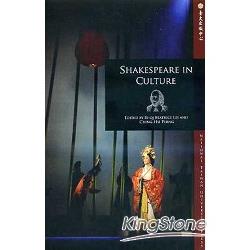
Shakespeare, as well as the reading, translating, teaching, criticizing, performing, and adapting of Shakespeare, does not exist outside culture. Culture in its many varieties not only informs the Shakespearean corpus, productions, and scholarship, but is also reciprocally shaped by them. Culture never remains stable, but constantly evolves, travels, procreates, blends, and mutates; no less incessantly, the understanding and rewriting of Shakespeare fluctuates. The relations between Shakespeare and culture thus comprise a dynamic flux which calls for examination and reexamination. It is this rich and even labyrinthine network of meanings—intercultural, intertextual, and intergeneric—that this volume intends to explicate. The essays collected here, most of them first presented at the Fourth Conference of the National Taiwan University Shakespeare Forum held in Taipei in 2009, cover a wide range of topics—religion, philosophy, history, aesthetics, as well as politics—and thereby illustrate how fruitfully complex the topic of cultural interchange can be.
目錄
List of Figures
Notes on Contributors
Acknowledgements
Foreword --The Future Is Fusion DENNIS KENNEDY
Preview DAVID BEVINGTON
Introduction BI-QI BEATRICE LEI
Part One: Shakespeare’s Response to His Culture
1. The Culture of Early Modern Protestantism: Predestination in Shakespearean Comedy and Tragedy
JASON GLECKMAN
2. Of Moors and Whores: Cultural Contrast in Othello
BARRY HALL
3. Honor and Maternity in Coriolanus
LIN CHI-I
Part Two: Reading in Shakespeare and Reading of Shakespeare
4. “A voucher stronger than ever law could make”: Writing and Media Literacy in Cymbeline
TED MOTOHASHI
5. Shakespeare Reverbatin’ : Spectral Media, Unread-ability, and the Weak Sovereignty of the In/Defi nitive Edition
RICHARD BURT
Part Three: Shakespeare in East Asia’s Indigenous Theatres
6. Bonding Bangzi and the Bard: The Case of Yue/Shu (Bond) and The Merchant of Venice
CHING-HSI PERNG
7. Korean Shakespeare and the Endings of the Lear Story
HAN YOUNGLIM
8. Is No Shakespeare in Noh Shakespeare? Re-/Mis-Shaping Shakespeare on the Noh Stage
MINAMI RYUTA
Part Four: Asian Shakespeare in Historical Perspective
9. Shakespeare, (Southeast) Asia, and the Question of Origins
JUDY CELINE ICK
10. The First Japanese Adaptation of Othello (1903) and Japanese Colonialism
YOSHIHARA YUKARI
11. Paradox of Chinese Nationalism: Two Gentlemen of Verona in Silent Film
BI-QI BEATRICE LEI
Part Five: Shakespeare as Global Commodity
12. Hamlet and the Market in Cultural Commodities: Global and Local Revisited
ANN THOMPSON
13. Uses and Abuses of Shakespeare’s Sonnets on Film and Television
MARIANGELA TEMPERA
Index
Notes on Contributors
Acknowledgements
Foreword --The Future Is Fusion DENNIS KENNEDY
Preview DAVID BEVINGTON
Introduction BI-QI BEATRICE LEI
Part One: Shakespeare’s Response to His Culture
1. The Culture of Early Modern Protestantism: Predestination in Shakespearean Comedy and Tragedy
JASON GLECKMAN
2. Of Moors and Whores: Cultural Contrast in Othello
BARRY HALL
3. Honor and Maternity in Coriolanus
LIN CHI-I
Part Two: Reading in Shakespeare and Reading of Shakespeare
4. “A voucher stronger than ever law could make”: Writing and Media Literacy in Cymbeline
TED MOTOHASHI
5. Shakespeare Reverbatin’ : Spectral Media, Unread-ability, and the Weak Sovereignty of the In/Defi nitive Edition
RICHARD BURT
Part Three: Shakespeare in East Asia’s Indigenous Theatres
6. Bonding Bangzi and the Bard: The Case of Yue/Shu (Bond) and The Merchant of Venice
CHING-HSI PERNG
7. Korean Shakespeare and the Endings of the Lear Story
HAN YOUNGLIM
8. Is No Shakespeare in Noh Shakespeare? Re-/Mis-Shaping Shakespeare on the Noh Stage
MINAMI RYUTA
Part Four: Asian Shakespeare in Historical Perspective
9. Shakespeare, (Southeast) Asia, and the Question of Origins
JUDY CELINE ICK
10. The First Japanese Adaptation of Othello (1903) and Japanese Colonialism
YOSHIHARA YUKARI
11. Paradox of Chinese Nationalism: Two Gentlemen of Verona in Silent Film
BI-QI BEATRICE LEI
Part Five: Shakespeare as Global Commodity
12. Hamlet and the Market in Cultural Commodities: Global and Local Revisited
ANN THOMPSON
13. Uses and Abuses of Shakespeare’s Sonnets on Film and Television
MARIANGELA TEMPERA
Index
序/導讀
Preview
David BEVINGTON
Shakespeare in Culture, having grown out of a conference at the National Taiwan University Shakespeare Forum in 2009, is devoted to the proposition that culture and Shakespeare alike are protean in their unceasing change, and are alike in such ways as to enable us to read “Shakespeare” as a kind of paradigm of that cultural change. Shakespeare is in culture in the sense that his plays and poems reflect and act upon social customs and ideas. Conversely, social customs and ideas infl uenced Shakespeare in his own day and continue to infl uence the great sum of what “Shakespeare” can mean to us today. The interplay between Shakespeare and culture is mutual and organic.
This idea is perhaps now accepted wisdom about Shakespeare and culture. The current project adds greatly to
that perception by reading Shakespeare in the rich context of multiculturalism, including Chinese opera, colonialism, youth culture, and much more. Stage productions from Asia add immensely to our appreciation of what Shakespeare can mean by expanding the cultural horizon. I have had the great pleasure of attending conferences in Taiwan and elsewhere on this subject, with extraordinary productions, culminating in April 2011 at the meeting in Bellevue, Washington, of the Shakespeare Association of America, where Bond, a Yuju Bangzi Opera adaptation of The Merchant of Venice, was staged with a star cast and orchestral accompaniment.
The essays in this present collection cover an admirable range of topics, and thereby illustrate how fruitfully complex the topic of cultural interchange can be. We are shown Shakespeare in the context of his own cultural environment: Protestantism and predestination, the “otherness” of racial difference, classical concepts of honor, Christian concepts of womanly silence and obedience, and still more. Other essays explore the language of interpretation, creating the potential for misinterpretation in male obsessions with womanly beauty and in discourses about sexuality. Shakespeare emerges in these essays as a profound and sensitive reader of cultural values and confl icts whose scripts are necessarily incomplete, prompting us to correct unceasingly our perceptions of what he has written. Of course we also need to reinterpret how Shakespeare’s plays can be presented on stage, and this is an area in which the present collection is particularly useful. I have already mentioned admiringly the Bond adaptation of The Merchant of Venice, which here serves as a vital text for Ching-Hsi Perng’s disquisition on how cross-cultural adaptation can transform the work while at the same time preserving and indeed enlarging the authenticity of the original. Two Korean productions of King Lear are analyzed in the present collection in such a way as to show how that play can be recast as tragicomedy. Noh and Kabuki theatres afford a similar opportunity to study how Shakespeare in production
can make brilliant use of Japanese staging traditions to bring out aspects of the plays not easily seen in more traditional Western contexts. I remember particularly a Kabuki version of Macbeth at Wisdom Bridge in Chicago in 1983, in which the rice-paper screens of a traditional Japanese interior afforded a means for the audience to behold the murder of Duncan, backlighted from behind and silhouetted onto the translucent screens, whereupon Duncan, by now fatally wounded, plunged through those screens onto the main stage and was pursued into the audience by a bloodmaddened Macbeth. Throughout, the three weird sisters were onstage, manipulating the gestures of the play’s main characters: when a weird sister nodded or grimaced or made a dismissive hand gesture, Macbeth or Lady Macbeth would do the same. Determinism took visible shape on the Japanese stage. Akira Kurosawa’s Throne of Blood (1957) is another brilliant example: not a word of Shakespeare’s text remains, and yet the film is arguably the most
David BEVINGTON
Shakespeare in Culture, having grown out of a conference at the National Taiwan University Shakespeare Forum in 2009, is devoted to the proposition that culture and Shakespeare alike are protean in their unceasing change, and are alike in such ways as to enable us to read “Shakespeare” as a kind of paradigm of that cultural change. Shakespeare is in culture in the sense that his plays and poems reflect and act upon social customs and ideas. Conversely, social customs and ideas infl uenced Shakespeare in his own day and continue to infl uence the great sum of what “Shakespeare” can mean to us today. The interplay between Shakespeare and culture is mutual and organic.
This idea is perhaps now accepted wisdom about Shakespeare and culture. The current project adds greatly to
that perception by reading Shakespeare in the rich context of multiculturalism, including Chinese opera, colonialism, youth culture, and much more. Stage productions from Asia add immensely to our appreciation of what Shakespeare can mean by expanding the cultural horizon. I have had the great pleasure of attending conferences in Taiwan and elsewhere on this subject, with extraordinary productions, culminating in April 2011 at the meeting in Bellevue, Washington, of the Shakespeare Association of America, where Bond, a Yuju Bangzi Opera adaptation of The Merchant of Venice, was staged with a star cast and orchestral accompaniment.
The essays in this present collection cover an admirable range of topics, and thereby illustrate how fruitfully complex the topic of cultural interchange can be. We are shown Shakespeare in the context of his own cultural environment: Protestantism and predestination, the “otherness” of racial difference, classical concepts of honor, Christian concepts of womanly silence and obedience, and still more. Other essays explore the language of interpretation, creating the potential for misinterpretation in male obsessions with womanly beauty and in discourses about sexuality. Shakespeare emerges in these essays as a profound and sensitive reader of cultural values and confl icts whose scripts are necessarily incomplete, prompting us to correct unceasingly our perceptions of what he has written. Of course we also need to reinterpret how Shakespeare’s plays can be presented on stage, and this is an area in which the present collection is particularly useful. I have already mentioned admiringly the Bond adaptation of The Merchant of Venice, which here serves as a vital text for Ching-Hsi Perng’s disquisition on how cross-cultural adaptation can transform the work while at the same time preserving and indeed enlarging the authenticity of the original. Two Korean productions of King Lear are analyzed in the present collection in such a way as to show how that play can be recast as tragicomedy. Noh and Kabuki theatres afford a similar opportunity to study how Shakespeare in production
can make brilliant use of Japanese staging traditions to bring out aspects of the plays not easily seen in more traditional Western contexts. I remember particularly a Kabuki version of Macbeth at Wisdom Bridge in Chicago in 1983, in which the rice-paper screens of a traditional Japanese interior afforded a means for the audience to behold the murder of Duncan, backlighted from behind and silhouetted onto the translucent screens, whereupon Duncan, by now fatally wounded, plunged through those screens onto the main stage and was pursued into the audience by a bloodmaddened Macbeth. Throughout, the three weird sisters were onstage, manipulating the gestures of the play’s main characters: when a weird sister nodded or grimaced or made a dismissive hand gesture, Macbeth or Lady Macbeth would do the same. Determinism took visible shape on the Japanese stage. Akira Kurosawa’s Throne of Blood (1957) is another brilliant example: not a word of Shakespeare’s text remains, and yet the film is arguably the most
配送方式
-
台灣
- 國內宅配:本島、離島
-
到店取貨:
 不限金額免運費



-
海外
- 國際快遞:全球
-
港澳店取:


訂購/退換貨須知
加入金石堂 LINE 官方帳號『完成綁定』,隨時掌握出貨動態:


提醒您!!
金石堂及銀行均不會請您操作ATM! 如接獲電話要求您前往ATM提款機,請不要聽從指示,以免受騙上當!
退換貨須知:
**提醒您,鑑賞期不等於試用期,退回商品須為全新狀態**
-
依據「消費者保護法」第19條及行政院消費者保護處公告之「通訊交易解除權合理例外情事適用準則」,以下商品購買後,除商品本身有瑕疵外,將不提供7天的猶豫期:
- 易於腐敗、保存期限較短或解約時即將逾期。(如:生鮮食品)
- 依消費者要求所為之客製化給付。(客製化商品)
- 報紙、期刊或雜誌。(含MOOK、外文雜誌)
- 經消費者拆封之影音商品或電腦軟體。
- 非以有形媒介提供之數位內容或一經提供即為完成之線上服務,經消費者事先同意始提供。(如:電子書、電子雜誌、下載版軟體、虛擬商品…等)
- 已拆封之個人衛生用品。(如:內衣褲、刮鬍刀、除毛刀…等)
- 若非上列種類商品,均享有到貨7天的猶豫期(含例假日)。
- 辦理退換貨時,商品(組合商品恕無法接受單獨退貨)必須是您收到商品時的原始狀態(包含商品本體、配件、贈品、保證書、所有附隨資料文件及原廠內外包裝…等),請勿直接使用原廠包裝寄送,或於原廠包裝上黏貼紙張或書寫文字。
- 退回商品若無法回復原狀,將請您負擔回復原狀所需費用,嚴重時將影響您的退貨權益。


商品評價