




Education in developments
Education in developmentsVolume 3




活動訊息
全館滿$1,200送150點金幣,4月歡慶兒童節,童書、玩具、文具滿1000元再送200點金幣!
內容簡介
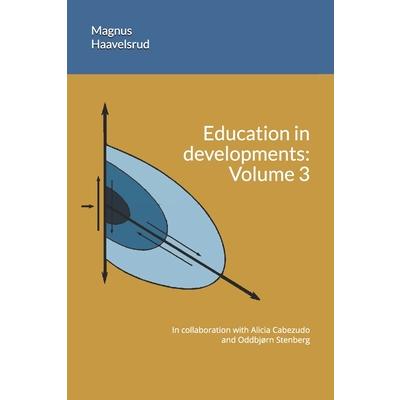
In this peace education book - "developments" in the plural form - is inspired by the Swedish social scientist Gunnar Myrdal when he - in criticizing dominant thought in economics in the 60ies - described development as an upward movement of qualities of value in a society and in the world. This book considers peace as a value. According to Johan Galtung`s recent theory, peace is built through upward movements of equity and empathy as well as processes of healing of past and present traumas combined with nonviolent conflict transformation. These peace qualities can be investigated in all places and times ranging from everyday life to the global level. It is argued that educational energy from below and political energy from above tend to seek harmony - even in contexts of strong antagonism between cultures and structures. This dynamism can be reflected in criticism of and struggles against problematic contextual conditions as well as in constructive ideas and plans for how those conditions can be changed. The cultural voice of education is therefore of political relevance pointing towards the need for transformation of problematic - sometimes violent - contextual conditions. In case such circumstances prevail, pedagogic activity may respond by adapting to the status quo - or resist. If such resistance is not possible within formal education, it is always possible (to varying degrees of difficulty and danger) in informal and/or non-formal education. In Part 1 it is argued that education in developments towards more peace is a topic of transdisciplinary magnitude. It comprises contents ranging from dyadic relations (and even inner peace) to the overwhelming structures on the global level. Micro cultural qualities meet qualities in global structures and their relations are decisive in the creation of more peace developments - involving actors from individuals to nation states and global corporations as well as organizations at any level/time. Chapters 1 through 3 introduce theoretical perspectives on education in developments towards peace in which the complexities of its substance not only pose the question of what is to be regarded as valid content, but also how contents relate to varying communication forms and differing contextual conditions. Dialectical relations among contents, forms and contextual conditions are central in transdisciplinary methodologies - embryonic roots of which are found in peace education initiatives as exemplified in the struggle against South African apartheid, Borrelli織s social work among street children in Naples and Nomura織s lifelong integrated education originating in Japan (chapter 4).In Part 2 it is argued that the understanding of relations between micro and macro requires respect for multiple epistemologies rooted in peoples織 life worlds when seeking their participation in developments towards more peace. Life worlds portrayed in novels written by young South African authors serve as examples of how people relate to each other in the transformation from apartheid to democracy (chapters 5 and 6). Chapter 7 highlights the roots of present constitutive rules inherited from past empires and chapter 8 discusses how social science is still characterized by multi-paradigmatic tensions in its understanding of power and knowledge.Part 3 deals with educational policy and methodologies. Chapter 9 presents an educational policy-making framework for participation, democracy and nonviolent civic resistance in Latin American circumstances. Chapter 10 discusses issues of transnational and neoliberalist policymaking in education furthered by OECD and the last chapter revisits peace learning methodology in light of Johan Galtung`s theory of peace.
配送方式
-
台灣
- 國內宅配:本島、離島
-
到店取貨:
 不限金額免運費



-
海外
- 國際快遞:全球
-
港澳店取:


訂購/退換貨須知
加入金石堂 LINE 官方帳號『完成綁定』,隨時掌握出貨動態:


商品運送說明:
- 本公司所提供的產品配送區域範圍目前僅限台灣本島。注意!收件地址請勿為郵政信箱。
- 商品將由廠商透過貨運或是郵局寄送。消費者訂購之商品若無法送達,經電話或 E-mail無法聯繫逾三天者,本公司將取消該筆訂單,並且全額退款。
- 當廠商出貨後,您會收到E-mail出貨通知,您也可透過【訂單查詢】確認出貨情況。
- 產品顏色可能會因網頁呈現與拍攝關係產生色差,圖片僅供參考,商品依實際供貨樣式為準。
- 如果是大型商品(如:傢俱、床墊、家電、運動器材等)及需安裝商品,請依商品頁面說明為主。訂單完成收款確認後,出貨廠商將會和您聯繫確認相關配送等細節。
- 偏遠地區、樓層費及其它加價費用,皆由廠商於約定配送時一併告知,廠商將保留出貨與否的權利。
提醒您!!
金石堂及銀行均不會請您操作ATM! 如接獲電話要求您前往ATM提款機,請不要聽從指示,以免受騙上當!
退換貨須知:
**提醒您,鑑賞期不等於試用期,退回商品須為全新狀態**
-
依據「消費者保護法」第19條及行政院消費者保護處公告之「通訊交易解除權合理例外情事適用準則」,以下商品購買後,除商品本身有瑕疵外,將不提供7天的猶豫期:
- 易於腐敗、保存期限較短或解約時即將逾期。(如:生鮮食品)
- 依消費者要求所為之客製化給付。(客製化商品)
- 報紙、期刊或雜誌。(含MOOK、外文雜誌)
- 經消費者拆封之影音商品或電腦軟體。
- 非以有形媒介提供之數位內容或一經提供即為完成之線上服務,經消費者事先同意始提供。(如:電子書、電子雜誌、下載版軟體、虛擬商品…等)
- 已拆封之個人衛生用品。(如:內衣褲、刮鬍刀、除毛刀…等)
- 若非上列種類商品,均享有到貨7天的猶豫期(含例假日)。
- 辦理退換貨時,商品(組合商品恕無法接受單獨退貨)必須是您收到商品時的原始狀態(包含商品本體、配件、贈品、保證書、所有附隨資料文件及原廠內外包裝…等),請勿直接使用原廠包裝寄送,或於原廠包裝上黏貼紙張或書寫文字。
- 退回商品若無法回復原狀,將請您負擔回復原狀所需費用,嚴重時將影響您的退貨權益。


商品評價