




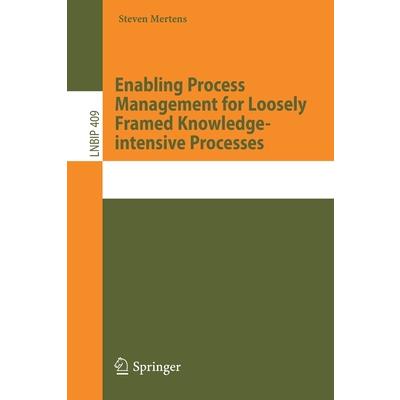
Enabling Process Management for Loosely Framed Knowledge-Intensive Processes




活動訊息
普發一萬放大術:滿千登記抽萬元好禮
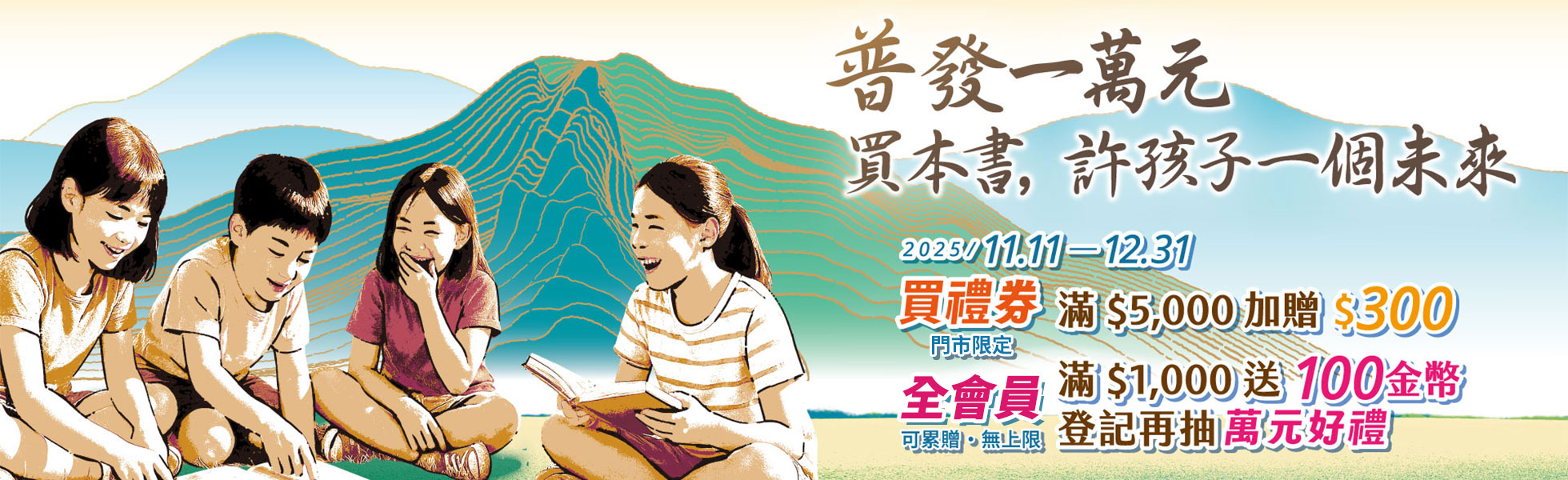
全站滿$1000送100點金幣,可累送! 新會員直接領$500!

內容簡介
1 Introduction.- 1.1 Terminology and Research Context.- 1.2 Problem Statement.- 1.3 Research Objectives.- 1.4 Research Methodology.- 1.5 Dissertation Structure.- 2 Towards a Decision-aware Declarative Process Modeling Language for Knowledge-intensive Processes.- 2.1 Introduction.- 2.2 Related Work.- 2.3 Research Methodology.- 2.4 Language Requirements.- 2.5 Designing the Perspectives.- 2.5.1 The arm fracture case.- 2.5.2 Declare as a foundation.- 2.5.3 Extending the functional and control-flow perspectives.- 2.5.4 Adding a notion of time-awareness to the constraint templates.- 2.5.5 Supporting the data perspective.- 2.5.6 Supporting the resource perspective.- 2.6 Integrating the Perspectives.- 2.6.1 Integrating the data perspective.- 2.6.2 Integrating the resource perspective.- 2.6.3 DeciClare.- 2.7 Evaluation.- 2.7.1 The evaluation set-up.- 2.7.2 Evaluating the perceived semantic quality.- 2.7.3 Evaluating the pragmatic quality.- 2.7.4 Evaluating the language-domain appropriateness.- 2.8 Positioning of DeciClare in the Research Domain.- 2.9 Conclusion.- 2.10 Limitations and Future Work.- 3 Discovering Loosely Framed Knowledge-intensive Processes using DeciClareMiner.- 3.1 Introduction.- 3.2 Related Work.- 3.3 Modeling Healthcare Processes: DeciClare.- 3.4 Research Methodology.- 3.5 Discovering Healthcare Process Models: DeciClareMiner.- 3.5.1 Phase 1: Mining decision-independent rules.- 3.5.1.1 Leveraged property.- 3.5.1.2 The iteration principle: optimizations.- 3.5.1.3 The join criteria.- 3.5.1.4 The join step.- 3.5.1.5 Running example.- 3.5.1.6 The output of the first phase.- 3.5.2 Phase 2: Mining decision-dependent rules.- 3.5.2.1 Fitness Function.- 3.5.2.2 Optimization.- 3.5.2.3 Running example.- 3.5.2.4 The output after the second phase.- 3.6 Evaluation.- 3.6.1 Dataset.- 3.6.2 Benchmark creation.- 3.6.3 Results.- 3.6.4 Discussion.- 3.7 Limitations.- 3.8 Conclusions and Directions for Future Research.- 4 Integrated Declarative Process and Decision Discovery of the Emergency Care Process.- 4.1 Introduction.- 4.2 Research Methodology.- 4.3 Discovering the Emergency Care Process with DeciClareMiner.- 4.3.1 Extraction.- 4.3.2 Data Preprocessing.- 4.3.3 Log Preparation.- 4.3.4 Mining a Process and Decision Model.- 4.3.5 Evaluation.- 4.4 Method Application: The Emergency Care Process.- 4.4.1 Extraction.- 4.4.2 Data Preprocessing.- 4.4.3 Log Preparation.- 4.4.4 Mining a Process and Decision Model.- 4.4.5 Evaluation.- 4.4.6 Discussion.- 4.5 Conclusion and Future Research.- 5 Operational Support for Loosely Framed Knowledge-intensive Processes.- 5.1 A Generic Framework for Flexible and Data-Aware Business Process Engines.- 5.1.1 Introduction.- 5.1.2 Research Methodology.- 5.1.3 Problem Statement and Solution Requirements.- 5.1.4 Data-Aware Declarative Process Enactment Framework.- 5.1.5 Demonstration.- 5.1.5.1 Process Definition: DeciClare.- 5.1.5.2 DeciClareEngine.- 5.1.5.3 Related Work.- 5.1.5.4 Conclusion and Future Research.- 5.2 Comparing Strategies to Generate Experience-based Clinical Process Recommendations that Leverage Similarity to Historic Data.- 5.2.1 Introduction.- 5.2.2 Related Work.- 5.2.3 Terminology and Formal Problem Definition.- 5.2.4 Research Methodology.- 5.2.5 Strategies.- 5.2.5.1 Pre-calculated similarity scorers.- 5.2.5.2 Positionless similarity scorers.- 5.2.5.3 Variable-position similarity scorers.- 5.2.5.4 Combinated scorers.- 5.2.6 Experiments.- 5.2.6.1 Experiment 1: comparing the general predictive power over different data sets.- 5.2.6.1.1 Experimental setup.- 5.2.6.1.2 Computational results.- 5.2.6.2 Experiment 2: the relation between predictive power and the size of H.- 5.2.6.2.1 Experimental setup.- 5.2.6.2.2 Computational results.- 5.2.7 Discussion.- 5.2.8 Conclusion and Future Research.- 6 Conclusion and Future Research.- 6.1 Research Results.- 6.2 Research Relevance and Implications.- 6.2.1 Implications for researchers.- 6.2.2 Implications for process stakeholders.- 6.2.3 Generalizability t
配送方式
-
台灣
- 國內宅配:本島、離島
-
到店取貨:
 不限金額免運費



-
海外
- 國際快遞:全球
-
港澳店取:


訂購/退換貨須知
加入金石堂 LINE 官方帳號『完成綁定』,隨時掌握出貨動態:


商品運送說明:
- 本公司所提供的產品配送區域範圍目前僅限台灣本島。注意!收件地址請勿為郵政信箱。
- 商品將由廠商透過貨運或是郵局寄送。消費者訂購之商品若無法送達,經電話或 E-mail無法聯繫逾三天者,本公司將取消該筆訂單,並且全額退款。
- 當廠商出貨後,您會收到E-mail出貨通知,您也可透過【訂單查詢】確認出貨情況。
- 產品顏色可能會因網頁呈現與拍攝關係產生色差,圖片僅供參考,商品依實際供貨樣式為準。
- 如果是大型商品(如:傢俱、床墊、家電、運動器材等)及需安裝商品,請依商品頁面說明為主。訂單完成收款確認後,出貨廠商將會和您聯繫確認相關配送等細節。
- 偏遠地區、樓層費及其它加價費用,皆由廠商於約定配送時一併告知,廠商將保留出貨與否的權利。
提醒您!!
金石堂及銀行均不會請您操作ATM! 如接獲電話要求您前往ATM提款機,請不要聽從指示,以免受騙上當!
退換貨須知:
**提醒您,鑑賞期不等於試用期,退回商品須為全新狀態**
-
依據「消費者保護法」第19條及行政院消費者保護處公告之「通訊交易解除權合理例外情事適用準則」,以下商品購買後,除商品本身有瑕疵外,將不提供7天的猶豫期:
- 易於腐敗、保存期限較短或解約時即將逾期。(如:生鮮食品)
- 依消費者要求所為之客製化給付。(客製化商品)
- 報紙、期刊或雜誌。(含MOOK、外文雜誌)
- 經消費者拆封之影音商品或電腦軟體。
- 非以有形媒介提供之數位內容或一經提供即為完成之線上服務,經消費者事先同意始提供。(如:電子書、電子雜誌、下載版軟體、虛擬商品…等)
- 已拆封之個人衛生用品。(如:內衣褲、刮鬍刀、除毛刀…等)
- 若非上列種類商品,均享有到貨7天的猶豫期(含例假日)。
- 辦理退換貨時,商品(組合商品恕無法接受單獨退貨)必須是您收到商品時的原始狀態(包含商品本體、配件、贈品、保證書、所有附隨資料文件及原廠內外包裝…等),請勿直接使用原廠包裝寄送,或於原廠包裝上黏貼紙張或書寫文字。
- 退回商品若無法回復原狀,將請您負擔回復原狀所需費用,嚴重時將影響您的退貨權益。


商品評價