




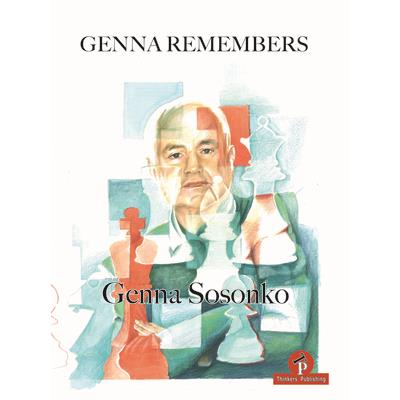
Genna Remembers
Genna Remembers




內容簡介
Half a century ago I left a country, the red color of which dominated a large portion of the world map. One way or another, the fate of almost every single person described in this book is forever linked with that now none-existent empire. Many of them ended up beyond its borders too. Cultures and traditions, and certainly not least of all a Soviet mentality, couldn't have just left them without a trace. Having been transplanted into a different environment, they had to play the role of themselves apart from certain corrections with regard to the tastes and customs of a new society. Nevertheless, every one of them, both those who left the Soviet Union, and those who stayed behind, were forever linked by one common united phenomenon: they all belonged to the Soviet school of chess. This school of chess was born in the 20's, but only began to count its true years starting in 1945, when the representatives of the Soviet Union dominated an American squad in a team match. Led by Mikhail Botvinnik, Soviet Grandmasters conquered and ruled the world, save for a short Fischer period, over the course of that same half century. In chess as well as ballet, or music, the word "Soviet" was actually a synonym for the highest quality interpretation of the discipline. The Soviet Union provided unheard of conditions for their players, which were the sort of which their colleagues in the West dare not even dream. Grandmasters and even Masters received a regular salary just for their professional qualifications, thereby raising the prestige of a chess player to what were unbelievable heights. It was a time when any finish in an international tournament, aside from first, was almost considered a failure when it came to Soviet players, and upon their return to Moscow they had to write an official explanation to the Chess Federation or the Sports Committee. The isolation of the country, separated from the rest of the world by an Iron Curtain, was another reason why, talent and energy often manifested themselves in relatively neutral fields. Still if with music, cinematography, philosophy, or history, the Soviet people were raised on a strict diet, that contained multiple restrictions, this did not apply to chess. Grandmasters, and Masters, all varied in terms of their upbringing, education, and mentality and were judged solely on their talent and mastery at the end of the day. Maybe that's why the Soviet school of chess was full of such improbable variety not only in terms of the style of play of its representatives, but also their different personality types. Built was a gigantic chess pyramid, at the base of which were school championships, which were closely followed by district ones. Later city championships, regions, republics, and finally-the ultimate cherry on top-the national event itself. The Championships of the Soviet Union were in no way inferior to the strongest international tournaments, and collections of the games played there came out as separate publications in the West. That huge brotherhood of chess contained its very own hierarchy within. Among the millions, and multitudes of parishioners-fans of the game-there were the priests-candidate masters. Highly respected were the cardinals-masters. As for Grandmasters though well...they were true Gods. Every person in the USSR knew their names, and those names sounded with just as much adoration, and admiration as those of the nation's other darlings-the country's best hockey players. In those days the coming of the American genius only served to strengthen the interest and attention of society towards chess, never mind the fact that by that point it had already been fully saturated by it. The presence of tons of spectators at a chess tournament in Moscow as shown in the series "The Queen's Gambit" is in no way an exaggeration. That there truly was the golden age of chess. Under the constant eye, and control of the government, chess in the USSR was closely interwoven with polit
贈品
指定商品滿$888即贈 閱讀隨行袋(款式隨機)
凡全站商品單筆訂單滿888元,即送「閱讀隨行袋」1個,款式隨機出貨。(數量有限,送完為止)
※ 海外訂單恕不提供贈品。
贈品已送完

配送方式
-
台灣
- 國內宅配:本島、離島
-
到店取貨:
 不限金額免運費



-
海外
- 國際快遞:全球
-
港澳店取:


詳細資料
詳細資料
-
- 語言
- 英文
- 裝訂
- 紙本平裝
-
- ISBN
- 9789464201178
- 分級
- 普通級
-
- 頁數
- 0
- 商品規格
-
- 出版地
- 美國
- 適讀年齡
- 全齡適讀
-
- 注音
- 級別
訂購/退換貨須知
加入金石堂 LINE 官方帳號『完成綁定』,隨時掌握出貨動態:

商品運送說明:
- 本公司所提供的產品配送區域範圍目前僅限台灣本島。注意!收件地址請勿為郵政信箱。
- 商品將由廠商透過貨運或是郵局寄送。消費者訂購之商品若無法送達,經電話或 E-mail無法聯繫逾三天者,本公司將取消該筆訂單,並且全額退款。
- 當廠商出貨後,您會收到E-mail出貨通知,您也可透過【訂單查詢】確認出貨情況。
- 產品顏色可能會因網頁呈現與拍攝關係產生色差,圖片僅供參考,商品依實際供貨樣式為準。
- 如果是大型商品(如:傢俱、床墊、家電、運動器材等)及需安裝商品,請依商品頁面說明為主。訂單完成收款確認後,出貨廠商將會和您聯繫確認相關配送等細節。
- 偏遠地區、樓層費及其它加價費用,皆由廠商於約定配送時一併告知,廠商將保留出貨與否的權利。
提醒您!!
金石堂及銀行均不會請您操作ATM! 如接獲電話要求您前往ATM提款機,請不要聽從指示,以免受騙上當!
退換貨須知:
**提醒您,鑑賞期不等於試用期,退回商品須為全新狀態**
-
依據「消費者保護法」第19條及行政院消費者保護處公告之「通訊交易解除權合理例外情事適用準則」,以下商品購買後,除商品本身有瑕疵外,將不提供7天的猶豫期:
- 易於腐敗、保存期限較短或解約時即將逾期。(如:生鮮食品)
- 依消費者要求所為之客製化給付。(客製化商品)
- 報紙、期刊或雜誌。(含MOOK、外文雜誌)
- 經消費者拆封之影音商品或電腦軟體。
- 非以有形媒介提供之數位內容或一經提供即為完成之線上服務,經消費者事先同意始提供。(如:電子書、電子雜誌、下載版軟體、虛擬商品…等)
- 已拆封之個人衛生用品。(如:內衣褲、刮鬍刀、除毛刀…等)
- 若非上列種類商品,均享有到貨7天的猶豫期(含例假日)。
- 辦理退換貨時,商品(組合商品恕無法接受單獨退貨)必須是您收到商品時的原始狀態(包含商品本體、配件、贈品、保證書、所有附隨資料文件及原廠內外包裝…等),請勿直接使用原廠包裝寄送,或於原廠包裝上黏貼紙張或書寫文字。
- 退回商品若無法回復原狀,將請您負擔回復原狀所需費用,嚴重時將影響您的退貨權益。


商品評價