



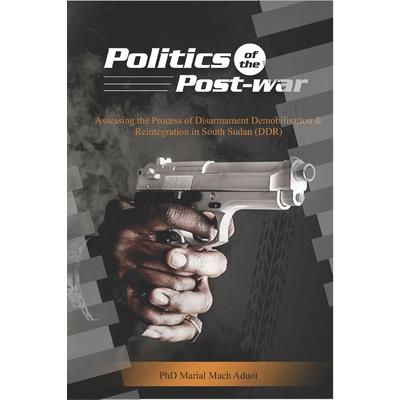
Politics of the Post-war
Politics of the Post-warPolitics of the Post-war: Assessing the proces




活動訊息
全館滿$1,200送150點金幣,4月歡慶兒童節,童書、玩具、文具滿1000元再送200點金幣!
內容簡介
The Disarmament, Demobilisation and Reintegration (DDR) of ex-combatants is a critical aspect of conflict prevention in countries emerging from civil war. It is often designed and implemented in post-war situations to contribute to broader national recovery efforts through Security Sector Reform (SSR), primarily to support the twin objectives of 'sustainable peace' and 'development'. The justification for the DDR was based on the perception that 'peace requires breaking the command-and-control structures operating over rebel fighters... thus making it more difficult for them to return to organised rebellion' (Spear, 2002, p. 141). Following the ending of the war between the Sudanese's Government and the Southern rebels - the Sudan People's Liberation Movement/Army (SPLM/A) in 2005 (Rolandsen, 2011), the security arrangements mandated the implementation of a DDR. According to the peace accord, the main antagonists, the Sudan Armed Forces (SAF) and the SPLM/A should demobilise a substantial number of their forces. The accord envisaged the DDR in South Sudan as a provisional security measure to facilitate the fundamental challenge of proportional downsizing of force, rationalisation and standardisation of ex-guerrilla forces into a national army. During implementation, the DDR in South Sudan fell short of meeting its envisaged objectives. This failure formed the basis of this project's research question: What are the factors affecting the DDR in South Sudan? The main challenge cited by this project is the conflict's context in Sudan. The war between military Islamists in the North and the radical secessionists in the South created a political situation characterised by conflicting security and political demands, which sought a military strategic balancing and conflict manipulation. In the post-war South/ern Sudan, the effort to conduct the DDR was met with hostile socio-political conditions based on an attempt to maintain the status-quo of a united Sudan versus partitionist demands. This contradiction caused a tense post-war transition, a situation 'best described as a no peace-no war environment (Munive, 2013, p. 586). Despite the importance attributed to DDR in the Comprehensive Peace Agreement, the unwillingness by the SPLM/A to downsize its force, and the perils of designing and applying such a complicated process, failed the initial CPA-DDR. The SPLM/A was extremely hesitant or unwilling to downsize its forces 'due to a perception that the CPA was merely a ceasefire with the North' (Munive, 2013, p. 586). In South Sudan, however, the internal outlooks were not supportive of the DDR. The devastating civil war resulted in a humanitarian catastrophe that claimed the lives of millions and drove more away from their homes between 1983-2005. Since then, South Sudan has been undergoing a process of violence and security configurations between the different ethno-political groups. This condition makes it difficult for the Southern Sudanese to maintain the requirements for the DDR, especially the capacity to reintegrate the demobilised ex-combatants. Thus, this thesis identifies various socio-political and economic factors affecting the process of DDR in South Sudan. One of the main issues emphasised is that South Sudan emerged from war too fragile and fragmented along ethno-political lines. In this challenging situation, the DDR confronts debilitating problems. This lack of capacity means the South Sudanese state cannot meet certain functions that require centralised use of force. The main emphasis is that South Sudan emerged from war to peace, from rebellion to government, and from contested territory to statehood, in quick transition. This region has been without government or supreme authority for a long time and hence developed alternative governments. This fragmentation of authorities allowed multiple armed structures to emerge, with intersecting influences on the use of force.
配送方式
-
台灣
- 國內宅配:本島、離島
-
到店取貨:
 不限金額免運費



-
海外
- 國際快遞:全球
-
港澳店取:


訂購/退換貨須知
加入金石堂 LINE 官方帳號『完成綁定』,隨時掌握出貨動態:


商品運送說明:
- 本公司所提供的產品配送區域範圍目前僅限台灣本島。注意!收件地址請勿為郵政信箱。
- 商品將由廠商透過貨運或是郵局寄送。消費者訂購之商品若無法送達,經電話或 E-mail無法聯繫逾三天者,本公司將取消該筆訂單,並且全額退款。
- 當廠商出貨後,您會收到E-mail出貨通知,您也可透過【訂單查詢】確認出貨情況。
- 產品顏色可能會因網頁呈現與拍攝關係產生色差,圖片僅供參考,商品依實際供貨樣式為準。
- 如果是大型商品(如:傢俱、床墊、家電、運動器材等)及需安裝商品,請依商品頁面說明為主。訂單完成收款確認後,出貨廠商將會和您聯繫確認相關配送等細節。
- 偏遠地區、樓層費及其它加價費用,皆由廠商於約定配送時一併告知,廠商將保留出貨與否的權利。
提醒您!!
金石堂及銀行均不會請您操作ATM! 如接獲電話要求您前往ATM提款機,請不要聽從指示,以免受騙上當!
退換貨須知:
**提醒您,鑑賞期不等於試用期,退回商品須為全新狀態**
-
依據「消費者保護法」第19條及行政院消費者保護處公告之「通訊交易解除權合理例外情事適用準則」,以下商品購買後,除商品本身有瑕疵外,將不提供7天的猶豫期:
- 易於腐敗、保存期限較短或解約時即將逾期。(如:生鮮食品)
- 依消費者要求所為之客製化給付。(客製化商品)
- 報紙、期刊或雜誌。(含MOOK、外文雜誌)
- 經消費者拆封之影音商品或電腦軟體。
- 非以有形媒介提供之數位內容或一經提供即為完成之線上服務,經消費者事先同意始提供。(如:電子書、電子雜誌、下載版軟體、虛擬商品…等)
- 已拆封之個人衛生用品。(如:內衣褲、刮鬍刀、除毛刀…等)
- 若非上列種類商品,均享有到貨7天的猶豫期(含例假日)。
- 辦理退換貨時,商品(組合商品恕無法接受單獨退貨)必須是您收到商品時的原始狀態(包含商品本體、配件、贈品、保證書、所有附隨資料文件及原廠內外包裝…等),請勿直接使用原廠包裝寄送,或於原廠包裝上黏貼紙張或書寫文字。
- 退回商品若無法回復原狀,將請您負擔回復原狀所需費用,嚴重時將影響您的退貨權益。


商品評價