




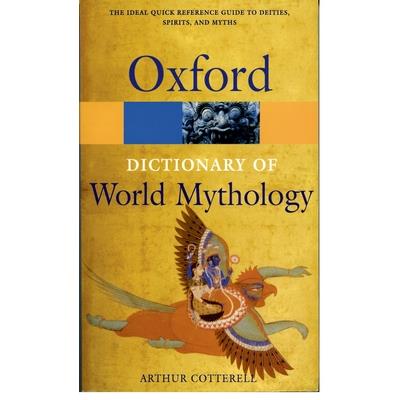
Dictionary of World Mythology
Dictionary of World Mythology



-
9折 650元
722元 - 認購希望書包,幫助弱勢孩童上學不中斷!
-
 預計最高可得金幣30點
?
可100%折抵
預計最高可得金幣30點
?
可100%折抵
活動加倍另計 -
HAPPY GO享100累1點 4點抵1元 折抵無上限
-
分類:英文書>人文社科>社會>社會議題/研究追蹤? 追蹤分類後,您會在第一時間收到分類新品通知。
- 作者: Arthur,Cotterell 追蹤 ? 追蹤作者後,您會在第一時間收到作者新書通知。
- 出版社: Oxford University Press, USA 追蹤 ? 追蹤出版社後,您會在第一時間收到出版社新書通知。
- 出版日:2024/08/16

內容簡介
"I am Nature, the universal Mother, mistress of all the elements, sovereign of all things spiritual....I am worshipped in many aspects, known by countless names, and propitiated with all manner of different rites, yet the whole round earth venerates me." With these words, Isis--the mother goddess of Egypt--reveals herself to her devotee, Lucius Apuleius, in his novel The Golden Ass. Just as this great goddess claimed to be universal, mythology itself exists in all cultures around the globe and extends back to the beginnings of human civilization. Plato first coined the term mythologia to mean merely the telling of stories which contain legendary figures. Since his time, and especially now with the resurgent interest in myths, mythology has come to hold greater significance and power as a crucial element of civilization as a whole.
Written by a leading scholar of ancient civilizations, A Dictionary of World Mythology presents the powerful gods of Greece, Rome, and Scandinavia, the more mystical deities of Buddhist and Hindu India, and the stern spirits of the African and American continents together in one fascinating volume. Drawing upon hundreds of myths from around the globe, Arthur Cotterell not only reveals the vast differences in these civilizations, but also demonstrates the unity of mankind in its fundamental need for explanations of the unknown.
Cotterell divides the chief myths of the world into seven main sections--West Asia, South and Central Asia, East Asia, Europe, America, Africa, and Oceania. Traveling through this vast array of legendary riches, we encounter Gilgamesh, the tyrannical, semi-divine king of Babylonia, who, according to the Gilgamesh Epic, rejected Ishtar and thus caused the ravaging of the earth by Anu, the bull of heaven, and the death of his lifelong friend Enkidu. We learn that Dharma--the term meaning the doctrine of duties and rights of each caste in the Hindu religion's ideal society--was an ancient Hindu sage who married thirteen of Daksha's daughters, and that, according to the Mahabharata, Daksha sprang from the right thumb of Brahma. From East Asian mythology, we discover Tsao Chun, the gentle Chinese kitchen god whose temple exists in a small niche near the cooking stove. Along with the well-known Greek and Roman deities, Europe has also brought us Dagda, the ancient Irish deity of life and death, who could, with one end of his staff, kill nine men and could, with the other end, restore them to life; and Balder, "the bleeding god" of Germanic mythology, renowned for his good looks and wisdom. According to Native American tribes living along the Xingu River in Brazil, a legendary nation called Minata-Karaia once existed with men who had holes in the top of their heads which produced high, loud whistles, and bunches of coconuts growing from their armpits. From Africa, Ogun, the Yoruban war god, descended by a spider's thread upon the marshy waste that existed prior to the formation of the earth. We also meet Papa, the ancestress of Hawaiian people, who functioned as Earth goddess and queen of the underworld, as well as mother of the gods.
Each section contains an introduction highlighting the history, lifestyle, and ideology of the particular ancient civilizations, as well as the landscape in which they lived and the reasons why different mythologies arose in different lands.
Written by a leading scholar of ancient civilizations, A Dictionary of World Mythology presents the powerful gods of Greece, Rome, and Scandinavia, the more mystical deities of Buddhist and Hindu India, and the stern spirits of the African and American continents together in one fascinating volume. Drawing upon hundreds of myths from around the globe, Arthur Cotterell not only reveals the vast differences in these civilizations, but also demonstrates the unity of mankind in its fundamental need for explanations of the unknown.
Cotterell divides the chief myths of the world into seven main sections--West Asia, South and Central Asia, East Asia, Europe, America, Africa, and Oceania. Traveling through this vast array of legendary riches, we encounter Gilgamesh, the tyrannical, semi-divine king of Babylonia, who, according to the Gilgamesh Epic, rejected Ishtar and thus caused the ravaging of the earth by Anu, the bull of heaven, and the death of his lifelong friend Enkidu. We learn that Dharma--the term meaning the doctrine of duties and rights of each caste in the Hindu religion's ideal society--was an ancient Hindu sage who married thirteen of Daksha's daughters, and that, according to the Mahabharata, Daksha sprang from the right thumb of Brahma. From East Asian mythology, we discover Tsao Chun, the gentle Chinese kitchen god whose temple exists in a small niche near the cooking stove. Along with the well-known Greek and Roman deities, Europe has also brought us Dagda, the ancient Irish deity of life and death, who could, with one end of his staff, kill nine men and could, with the other end, restore them to life; and Balder, "the bleeding god" of Germanic mythology, renowned for his good looks and wisdom. According to Native American tribes living along the Xingu River in Brazil, a legendary nation called Minata-Karaia once existed with men who had holes in the top of their heads which produced high, loud whistles, and bunches of coconuts growing from their armpits. From Africa, Ogun, the Yoruban war god, descended by a spider's thread upon the marshy waste that existed prior to the formation of the earth. We also meet Papa, the ancestress of Hawaiian people, who functioned as Earth goddess and queen of the underworld, as well as mother of the gods.
Each section contains an introduction highlighting the history, lifestyle, and ideology of the particular ancient civilizations, as well as the landscape in which they lived and the reasons why different mythologies arose in different lands.
配送方式
-
台灣
- 國內宅配:本島、離島
-
到店取貨:
 不限金額免運費



-
海外
- 國際快遞:全球
-
港澳店取:


訂購/退換貨須知
加入金石堂 LINE 官方帳號『完成綁定』,隨時掌握出貨動態:


商品運送說明:
- 本公司所提供的產品配送區域範圍目前僅限台灣本島。注意!收件地址請勿為郵政信箱。
- 商品將由廠商透過貨運或是郵局寄送。消費者訂購之商品若無法送達,經電話或 E-mail無法聯繫逾三天者,本公司將取消該筆訂單,並且全額退款。
- 當廠商出貨後,您會收到E-mail出貨通知,您也可透過【訂單查詢】確認出貨情況。
- 產品顏色可能會因網頁呈現與拍攝關係產生色差,圖片僅供參考,商品依實際供貨樣式為準。
- 如果是大型商品(如:傢俱、床墊、家電、運動器材等)及需安裝商品,請依商品頁面說明為主。訂單完成收款確認後,出貨廠商將會和您聯繫確認相關配送等細節。
- 偏遠地區、樓層費及其它加價費用,皆由廠商於約定配送時一併告知,廠商將保留出貨與否的權利。
提醒您!!
金石堂及銀行均不會請您操作ATM! 如接獲電話要求您前往ATM提款機,請不要聽從指示,以免受騙上當!
退換貨須知:
**提醒您,鑑賞期不等於試用期,退回商品須為全新狀態**
-
依據「消費者保護法」第19條及行政院消費者保護處公告之「通訊交易解除權合理例外情事適用準則」,以下商品購買後,除商品本身有瑕疵外,將不提供7天的猶豫期:
- 易於腐敗、保存期限較短或解約時即將逾期。(如:生鮮食品)
- 依消費者要求所為之客製化給付。(客製化商品)
- 報紙、期刊或雜誌。(含MOOK、外文雜誌)
- 經消費者拆封之影音商品或電腦軟體。
- 非以有形媒介提供之數位內容或一經提供即為完成之線上服務,經消費者事先同意始提供。(如:電子書、電子雜誌、下載版軟體、虛擬商品…等)
- 已拆封之個人衛生用品。(如:內衣褲、刮鬍刀、除毛刀…等)
- 若非上列種類商品,均享有到貨7天的猶豫期(含例假日)。
- 辦理退換貨時,商品(組合商品恕無法接受單獨退貨)必須是您收到商品時的原始狀態(包含商品本體、配件、贈品、保證書、所有附隨資料文件及原廠內外包裝…等),請勿直接使用原廠包裝寄送,或於原廠包裝上黏貼紙張或書寫文字。
- 退回商品若無法回復原狀,將請您負擔回復原狀所需費用,嚴重時將影響您的退貨權益。



商品評價