




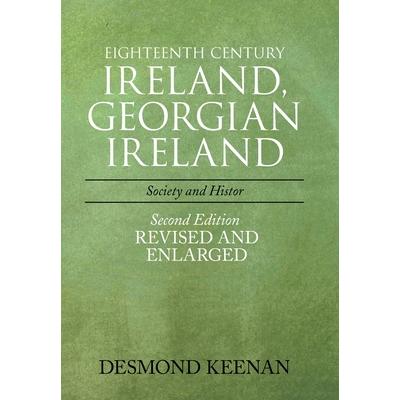
Eighteenth Century Ireland, Georgian Ireland
Eighteenth Century Ireland, Georgian Ireland




活動訊息
中文書、漫畫輕小說5折起、電子書35元起,全館滿$1,000送100點金幣

內容簡介
The 18th century tended to be neglected by Irish historians in the 20th century. Irish achievements in the 18th century were largely those of Protestants, so Catholics tended to disregard them. Catholic historians concentrated on the grievances of the Catholics and exaggerated them. The Penal Laws against Catholics were stressed regardless of the fact that most of them affected only a small number of rich Catholics, the Catholic landowners who had sufficient wealth to raise a regiment of infantry to fight for the Catholic Stuart pretenders. The practice of the Catholic religion was not made illegal. Catholic priests could live openly and have their own chapels and mass-houses. As was the law at the time, the ordinary workers, Catholic or Protestant, had no vote, and so were ignored by the political classes. Nor had they any ambitions in the direction of taking control of the state. If they had local grievances, and in many places they had, especially with regard to rents and tithes, they dealt with them locally, and often brutally, but they were not trying to overthrow the Government. If some of them looked for a French invasion it was in the hope that the French would bring guns and powder to assist them in their local disputes. It is a peculiarity, as yet unexplained, that most of the Catholic working classes, by the end of the century, had names that reflected their ancestry as minor local chiefs. The question remains where did the descendants of the former workers, the villeins and betaghs go? The answer seems to be that in times of war and famine the members of even the smallest chiefly family stood a better chance of surviving. This would explain the long-standing grievance of the Catholic peasants that they were unjustly deprived of their land. We will perhaps never know the answer to this question. Penal Laws against religious minorities were the norm in Europe. The religion of the state was decided by the king according to the adage cuius regio eius religio (each king decides the state religion for his own kingdom). At the end of the 17th century, the Catholic landowners fought hard for the Catholic James II. But in the 18th century they lost interest and preferred to come to terms with the actually reigning monarch, and became Protestants to retain their lands and influence. Unlike in Scotland, support for the Catholic Stuarts remained minimal. Nor was there any attempt to establish in independent kingdom or republic. When such an attempt was made at the very end of the century it was led by Protestant gentlemen in imitation of their American cousins. Ireland in the 18th century was not ruled by a foreign elite like the British raj in India. It was an aristocratic society, like all the other European societies at the time. Some of these were descendants of Gaelic chiefs; some were descendants of those who had received grants of confiscated land; some were descendants of the moneylenders who had lent money to improvident Gaelic chiefs. Together these formed the ruling aristocracy who controlled Parliament and made the Irish laws, controlled the army, the judiciary and the executive. Access to this elite was open to any gentleman who was willing to take the oath of allegiance and conform to the state church, the Established Church but not the nonconformists. British kings did not occupy Ireland and impose foreign rule. Ireland had her own Government and elected Parliament. By a decree of King John in the 12th century, the Lordship of Ireland was annexed to the person of the king of England. When not present in Ireland in person, and he rarely was, his powers were exercised by a Lord Lieutenant to whom considerable executive power was given. He presided over the Irish Privy Council which drew up the legislation to be presented to the Irish Parliament. One restraint was imposed on the Irish Parliament. By Poynings' Law it was not allowed to pass legislation that infringed on the rights of the king or his English Priv
配送方式
-
台灣
- 國內宅配:本島、離島
-
到店取貨:
 不限金額免運費



-
海外
- 國際快遞:全球
-
港澳店取:


訂購/退換貨須知
加入金石堂 LINE 官方帳號『完成綁定』,隨時掌握出貨動態:


商品運送說明:
- 本公司所提供的產品配送區域範圍目前僅限台灣本島。注意!收件地址請勿為郵政信箱。
- 商品將由廠商透過貨運或是郵局寄送。消費者訂購之商品若無法送達,經電話或 E-mail無法聯繫逾三天者,本公司將取消該筆訂單,並且全額退款。
- 當廠商出貨後,您會收到E-mail出貨通知,您也可透過【訂單查詢】確認出貨情況。
- 產品顏色可能會因網頁呈現與拍攝關係產生色差,圖片僅供參考,商品依實際供貨樣式為準。
- 如果是大型商品(如:傢俱、床墊、家電、運動器材等)及需安裝商品,請依商品頁面說明為主。訂單完成收款確認後,出貨廠商將會和您聯繫確認相關配送等細節。
- 偏遠地區、樓層費及其它加價費用,皆由廠商於約定配送時一併告知,廠商將保留出貨與否的權利。
提醒您!!
金石堂及銀行均不會請您操作ATM! 如接獲電話要求您前往ATM提款機,請不要聽從指示,以免受騙上當!
退換貨須知:
**提醒您,鑑賞期不等於試用期,退回商品須為全新狀態**
-
依據「消費者保護法」第19條及行政院消費者保護處公告之「通訊交易解除權合理例外情事適用準則」,以下商品購買後,除商品本身有瑕疵外,將不提供7天的猶豫期:
- 易於腐敗、保存期限較短或解約時即將逾期。(如:生鮮食品)
- 依消費者要求所為之客製化給付。(客製化商品)
- 報紙、期刊或雜誌。(含MOOK、外文雜誌)
- 經消費者拆封之影音商品或電腦軟體。
- 非以有形媒介提供之數位內容或一經提供即為完成之線上服務,經消費者事先同意始提供。(如:電子書、電子雜誌、下載版軟體、虛擬商品…等)
- 已拆封之個人衛生用品。(如:內衣褲、刮鬍刀、除毛刀…等)
- 若非上列種類商品,均享有到貨7天的猶豫期(含例假日)。
- 辦理退換貨時,商品(組合商品恕無法接受單獨退貨)必須是您收到商品時的原始狀態(包含商品本體、配件、贈品、保證書、所有附隨資料文件及原廠內外包裝…等),請勿直接使用原廠包裝寄送,或於原廠包裝上黏貼紙張或書寫文字。
- 退回商品若無法回復原狀,將請您負擔回復原狀所需費用,嚴重時將影響您的退貨權益。


商品評價