




Hortfunde Der Sp瓣tbronze- Und Fr羹heisenzeit
Hortfunde Der Sp瓣tbronze- Und Fr羹heisenzeit




活動訊息
普發一萬放大術:滿千登記抽萬元好禮

大數據幫你找下一本愛書!今天填寫,隔天立刻揭曉!

內容簡介
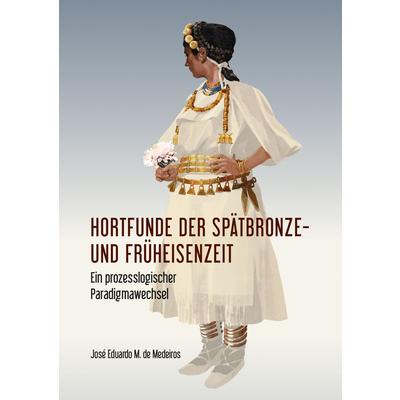
Deutsche: In dieser Dissertation hat Jos矇 Eduardo M. de Medeiros einen neuen theoretischen Ansatz mit der Untersuchung konkreter Probleme in der Bronze- und Eisenzeitforschung Mitteleuropas in Einklang gebracht. Das urspr羹ngliche Ziel war die Untersuchung der Schmuckhorte der Sp瓣tbronzezeit in Frankreich. Aber eine anf瓣ngliche Besch瓣ftigung mit der Literatur zu den Hortfunden der Sp瓣tbronze- und Fr羹heisenzeit f羹hrte zu der Einsicht, dass die Grundlagen pr瓣historischer Interpretation einer kritischen Revision bedurften.Die angebotene Reflexion ist eng mit einer soziologischen Kulturtheorie verkn羹pft, die eine kritische Sicht darauf miteinbezieht, wie Menschen Objekte und Ereignisse in der Welt erkl瓣ren. Es gibt einen revolution瓣ren Wechsel zwischen vormodernen (handlungs- und substanzlogischen) und modernen (prozessualen) Erkl瓣rungen, und es war Medeiros' Aufgabe, die Folgen dieses Paradigmenwechsels f羹r die arch瓣ologische Forschung zu verstehen.Da diese Einsichten zu einer Relativierung der Niederlegungsabsichten als heuristisches Werkzeug f羹hren und die Niederlegungsabsicht weiterhin als ein wichtiges Instrument f羹r die Kategorisierung von Hortfunden dient, handelt es sich um Konsequenzen f羹r die arch瓣ologische Interpretation im Allgemeinen und f羹r die Deutung der Hortfunde der Sp瓣tbronze- und Fr羹heisenzeit im Speziellen.Die Arbeit zeigt, dass Schmuck-, Gef瓣?- und Waffenhorte verschiedene Arten von Deponierungen darstellen und dass, wenn diese Depots im religi繹sen Kontext der Zeit betrachtet werden, Schmuck und Gef瓣?e die gleiche Bedeutung wie Waffen tragen. Dies steht im Widerspruch zu einer g瓣ngigen Auffassung der Sp瓣tbronze- und Fr羹heisenzeit, welche die Krieger und ihre Waffen in den Vordergrund stellt.Der Autor zeigt, dass dies eine kulturell konstruierte, "m瓣nnliche" Voreingenommenheit ist, die psychologische und soziologische Ursachen hat. Schlie?lich bietet dieses Buch einen rekonstruktiven Ansatz an, der die kulturelle Bedeutung der Schmuckhorte aufkl瓣rt.English: Throughout his Ph.D. Thesis, Jos矇 Eduardo M. de Medeiros has balanced a deeply theoretical approach with the study of concrete problems within Central European Bronze and Iron Age Archaeology. The original objective of his thesis was the investigation of Late Bronze Age jewelry hoards in France. But an initial examination of the literature on the hoards of the Late Bronze Age and Early Iron Age led to the insight that the foundations of prehistoric interpretation required a deeper critical revision.The proposed reflection is closely linked to a sociological theory of culture that entails a critical view of how human beings explain objects and events in the world. According to this view, there is a marked revolutionary change between "pre-modern" (subject logic) and "modern" (processual logic) explanations, and it has been Medeiros's work to understand the ramifications of this paradigm shift for archaeological investigation. Essentially, this theoretical reflection questions attempts to explain a fact through recourse to the subjective intention or plan behind the fact. Consequently, these insights lead to a relativization of the subjective intention as a tool for interpretation of archaeological remains.Such a position poses serious consequences for archaeological theories in general, and for the interpretations of the hoarding phenomenon of the Late Bronze and Early Iron Age in particular. The archaeological category of hoards is currently defined as an intentional selection of objects for unknown reasons. Nevertheless, the underlying intention is a highly-important instrument for the classification of the hoard finds as being either profane and/or ritual forms of deposition. Thus, an over reliance on the intentions behind an act clearly contrasts with the negative definition of that category.This work shows that jewelry, vessels and weapons constitute different kinds of depositions (a.k.a. hoards), and that in addition, when these deposition
配送方式
-
台灣
- 國內宅配:本島、離島
-
到店取貨:
-
海外
- 國際快遞:全球
訂購/退換貨須知
加入金石堂 LINE 官方帳號『完成綁定』,隨時掌握出貨動態:


商品運送說明:
- 本公司所提供的產品配送區域範圍目前僅限台灣本島。注意!收件地址請勿為郵政信箱。
- 商品將由廠商透過貨運或是郵局寄送。消費者訂購之商品若無法送達,經電話或 E-mail無法聯繫逾三天者,本公司將取消該筆訂單,並且全額退款。
- 當廠商出貨後,您會收到E-mail出貨通知,您也可透過【訂單查詢】確認出貨情況。
- 產品顏色可能會因網頁呈現與拍攝關係產生色差,圖片僅供參考,商品依實際供貨樣式為準。
- 如果是大型商品(如:傢俱、床墊、家電、運動器材等)及需安裝商品,請依商品頁面說明為主。訂單完成收款確認後,出貨廠商將會和您聯繫確認相關配送等細節。
- 偏遠地區、樓層費及其它加價費用,皆由廠商於約定配送時一併告知,廠商將保留出貨與否的權利。
提醒您!!
金石堂及銀行均不會請您操作ATM! 如接獲電話要求您前往ATM提款機,請不要聽從指示,以免受騙上當!
退換貨須知:
**提醒您,鑑賞期不等於試用期,退回商品須為全新狀態**
-
依據「消費者保護法」第19條及行政院消費者保護處公告之「通訊交易解除權合理例外情事適用準則」,以下商品購買後,除商品本身有瑕疵外,將不提供7天的猶豫期:
- 易於腐敗、保存期限較短或解約時即將逾期。(如:生鮮食品)
- 依消費者要求所為之客製化給付。(客製化商品)
- 報紙、期刊或雜誌。(含MOOK、外文雜誌)
- 經消費者拆封之影音商品或電腦軟體。
- 非以有形媒介提供之數位內容或一經提供即為完成之線上服務,經消費者事先同意始提供。(如:電子書、電子雜誌、下載版軟體、虛擬商品…等)
- 已拆封之個人衛生用品。(如:內衣褲、刮鬍刀、除毛刀…等)
- 若非上列種類商品,均享有到貨7天的猶豫期(含例假日)。
- 辦理退換貨時,商品(組合商品恕無法接受單獨退貨)必須是您收到商品時的原始狀態(包含商品本體、配件、贈品、保證書、所有附隨資料文件及原廠內外包裝…等),請勿直接使用原廠包裝寄送,或於原廠包裝上黏貼紙張或書寫文字。
- 退回商品若無法回復原狀,將請您負擔回復原狀所需費用,嚴重時將影響您的退貨權益。





商品評價