




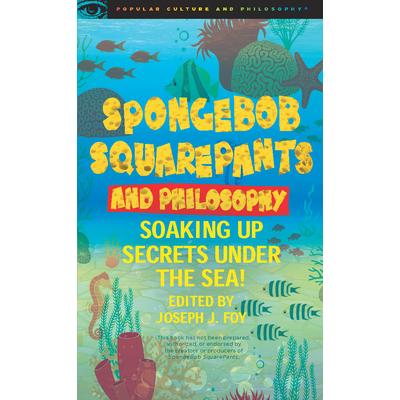
SpongeBob SquarePants and Philosophy
SpongeBob SquarePants and Philosophy


-
9折 511元
568元
-
 預計最高可得金幣25點
?
可100%折抵
預計最高可得金幣25點
?
可100%折抵
活動加倍另計 -
HAPPY GO享100累1點 4點抵1元 折抵無上限
-
分類:英文書>人文社科>哲學思想追蹤? 追蹤分類後,您會在第一時間收到分類新品通知。
- 作者: Foy, Joseph J. (EDT) 追蹤 ? 追蹤作者後,您會在第一時間收到作者新書通知。
- 出版社: Open Court 追蹤 ? 追蹤出版社後,您會在第一時間收到出版社新書通知。
- 出版日:2011/08/09

活動訊息
普發一萬放大術:滿千登記抽萬元好禮

大數據幫你找下一本愛書!今天填寫,隔天立刻揭曉!

內容簡介
SpongeBob SquarePants and Philosophy is designed to introduce fans of SpongeBob SquarePants to some of the great thinkers and questions in philosophy. The essays can be shared by young and old alike, kindling new interest in philosophy and life's big questions. What keeps SpongeBob "reeling in" major audiences on a daily basis is that underneath the lighthearted and whimsical exterior are the seeds of long-standing and important philosophical discussions about identity and the self, our obligations toward others, benefits and tensions of the individual in community, principles of the marketplace and environmental ethics, and questions of just how exactly Jack Kahuna Laguna can build a fire at the bottom of the ocean. (Okay, so perhaps we don't have an answer for that last one, but maybe if you look into that fire long enough the answer will be revealed.)
The book begins with a section exploration of the major characters of the series. To begin, Nicole Pramik uses the philosophies of Aristotle to demonstrate why SpongeBob, more than any other character in the series, is defined by a life of well-being and flourishing. In chapter two, Timothy Dunn provides an assessment of SpongeBob's best friend, Patrick Star, using the writings of J.S. Mill to ask if the life of simple pleasures preferable to the life of the mind, while in chapter three Natasha Liebig uses the German pessimist philosophers to reveal what it means to live the life of Squidward Q. Tentacles. Chapter four uses the competing philosophies of Ayn Rand and Karl Marx to evaluate the actions of SpongeBob's boss, Mr. Eugene Krabs, while in chapter five Denise Du Vernay explains how Sandy Cheeks offers a brand of feminism that breaks down traditional assumptions about masculine and feminine identity and repackages them into constructive and empowering messages for young people. Concluding this section of the book, Nicholas Michaud uses the philosophy of Friedrich Nietzsche to ask us reconsider our belief that SpongeBob and his friends are somehow heroic by giving us insight into the "will to power" held by the powerful little protozoan, Plankton.
Section two of the book is dedicated to exploring the community of Bikini Bottom, starting with Shaun Young's examination of Bikini Bottom as a representation of various theories of the just state. In chapter eight, Nathan Zook looks into whether we might learn something about theories of democracy and political participation from an election between SpongeBob and Squidward for "Royal Krabby," while in chapter nine Adam Barkman uses the writings of Dante Alighieri to assess the monarchal rule of King Neptune. Chapter ten uses the legal philosophies of thinkers like Thomas Hobbes, John Locke, John Rawls, and David Hume to answer whether Mr. Krabs has the proper philosophical basis upon which to claim an individual right to possess and profit from the secret Krabby Patty formula. Chapter eleven then takes us to the pristine Jellyfish Fields where Greg Ahrenhoerster uses literary naturalism and the works of transcendentalist thinkers to examine environmental ethics and an individual's obligations to shared resources.
The third and final section uses SpongeBob to explore psychological and scientific questions that float around under the sea. In chapter twelve, Katie Anderson uses the episode "Sleepy Time" to explore Cartesian principles related to the philosophical questions that attempt to distinguish between dreams and reality, and in chapter thirteen Robert Kincaid continues the examination into philosophical issues related to the mind by using SpongeBob, Squidward, and Patrick to relate the theories of Sigmund Freud. Chapter fourteen is dedicated to an introduction into the philosophy of science by Wilson Gonz獺aacute;lez-Espada, and Robert Vuckovich concludes the volume with an essay on SpongeBob's insatiable
The book begins with a section exploration of the major characters of the series. To begin, Nicole Pramik uses the philosophies of Aristotle to demonstrate why SpongeBob, more than any other character in the series, is defined by a life of well-being and flourishing. In chapter two, Timothy Dunn provides an assessment of SpongeBob's best friend, Patrick Star, using the writings of J.S. Mill to ask if the life of simple pleasures preferable to the life of the mind, while in chapter three Natasha Liebig uses the German pessimist philosophers to reveal what it means to live the life of Squidward Q. Tentacles. Chapter four uses the competing philosophies of Ayn Rand and Karl Marx to evaluate the actions of SpongeBob's boss, Mr. Eugene Krabs, while in chapter five Denise Du Vernay explains how Sandy Cheeks offers a brand of feminism that breaks down traditional assumptions about masculine and feminine identity and repackages them into constructive and empowering messages for young people. Concluding this section of the book, Nicholas Michaud uses the philosophy of Friedrich Nietzsche to ask us reconsider our belief that SpongeBob and his friends are somehow heroic by giving us insight into the "will to power" held by the powerful little protozoan, Plankton.
Section two of the book is dedicated to exploring the community of Bikini Bottom, starting with Shaun Young's examination of Bikini Bottom as a representation of various theories of the just state. In chapter eight, Nathan Zook looks into whether we might learn something about theories of democracy and political participation from an election between SpongeBob and Squidward for "Royal Krabby," while in chapter nine Adam Barkman uses the writings of Dante Alighieri to assess the monarchal rule of King Neptune. Chapter ten uses the legal philosophies of thinkers like Thomas Hobbes, John Locke, John Rawls, and David Hume to answer whether Mr. Krabs has the proper philosophical basis upon which to claim an individual right to possess and profit from the secret Krabby Patty formula. Chapter eleven then takes us to the pristine Jellyfish Fields where Greg Ahrenhoerster uses literary naturalism and the works of transcendentalist thinkers to examine environmental ethics and an individual's obligations to shared resources.
The third and final section uses SpongeBob to explore psychological and scientific questions that float around under the sea. In chapter twelve, Katie Anderson uses the episode "Sleepy Time" to explore Cartesian principles related to the philosophical questions that attempt to distinguish between dreams and reality, and in chapter thirteen Robert Kincaid continues the examination into philosophical issues related to the mind by using SpongeBob, Squidward, and Patrick to relate the theories of Sigmund Freud. Chapter fourteen is dedicated to an introduction into the philosophy of science by Wilson Gonz獺aacute;lez-Espada, and Robert Vuckovich concludes the volume with an essay on SpongeBob's insatiable
配送方式
-
台灣
- 國內宅配:本島、離島
-
到店取貨:
 不限金額免運費



-
海外
- 國際快遞:全球
-
港澳店取:


訂購/退換貨須知
加入金石堂 LINE 官方帳號『完成綁定』,隨時掌握出貨動態:


商品運送說明:
- 本公司所提供的產品配送區域範圍目前僅限台灣本島。注意!收件地址請勿為郵政信箱。
- 商品將由廠商透過貨運或是郵局寄送。消費者訂購之商品若無法送達,經電話或 E-mail無法聯繫逾三天者,本公司將取消該筆訂單,並且全額退款。
- 當廠商出貨後,您會收到E-mail出貨通知,您也可透過【訂單查詢】確認出貨情況。
- 產品顏色可能會因網頁呈現與拍攝關係產生色差,圖片僅供參考,商品依實際供貨樣式為準。
- 如果是大型商品(如:傢俱、床墊、家電、運動器材等)及需安裝商品,請依商品頁面說明為主。訂單完成收款確認後,出貨廠商將會和您聯繫確認相關配送等細節。
- 偏遠地區、樓層費及其它加價費用,皆由廠商於約定配送時一併告知,廠商將保留出貨與否的權利。
提醒您!!
金石堂及銀行均不會請您操作ATM! 如接獲電話要求您前往ATM提款機,請不要聽從指示,以免受騙上當!
退換貨須知:
**提醒您,鑑賞期不等於試用期,退回商品須為全新狀態**
-
依據「消費者保護法」第19條及行政院消費者保護處公告之「通訊交易解除權合理例外情事適用準則」,以下商品購買後,除商品本身有瑕疵外,將不提供7天的猶豫期:
- 易於腐敗、保存期限較短或解約時即將逾期。(如:生鮮食品)
- 依消費者要求所為之客製化給付。(客製化商品)
- 報紙、期刊或雜誌。(含MOOK、外文雜誌)
- 經消費者拆封之影音商品或電腦軟體。
- 非以有形媒介提供之數位內容或一經提供即為完成之線上服務,經消費者事先同意始提供。(如:電子書、電子雜誌、下載版軟體、虛擬商品…等)
- 已拆封之個人衛生用品。(如:內衣褲、刮鬍刀、除毛刀…等)
- 若非上列種類商品,均享有到貨7天的猶豫期(含例假日)。
- 辦理退換貨時,商品(組合商品恕無法接受單獨退貨)必須是您收到商品時的原始狀態(包含商品本體、配件、贈品、保證書、所有附隨資料文件及原廠內外包裝…等),請勿直接使用原廠包裝寄送,或於原廠包裝上黏貼紙張或書寫文字。
- 退回商品若無法回復原狀,將請您負擔回復原狀所需費用,嚴重時將影響您的退貨權益。


商品評價