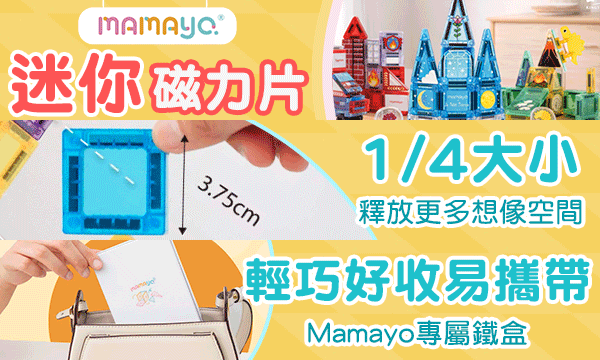




Co-parenting ABCs
Co-parenting ABCs




活動訊息
全館滿$1,200送150點金幣,4月歡慶兒童節,童書、玩具、文具滿1000元再送200點金幣!
內容簡介
Learning to co-parent requires practice and patience. Going through a divorce is difficult enough, but having to stay in a co-parenting relationship to raise your child provides multiple and unique challenges. You simply can't walk away from your ex when you have a child to raise. Co-parenting-working cooperatively to raise your child with your ex-is a learned process with many pitfalls (and tribulations) along the way. Learning to communicate effectively is essential to the most important job you will ever have: raising your child together when you are no longer a family. With helpful examples and practical methods about fixing-and avoiding-conflicts, this book is a guide to help you to effectively co-parent with your ex after your relationship is over. Chapters in the book: Always. Business. Compassion. Discretion. Energy. Forgiveness. Golden. Honor. Important. Judgment. Kindness. Learn. Mistakes. Normalcy. Others. Professionalism. Question. Respond. Silence. Time. Unintentional. Vortex. Work. eXpectations. Yes. Zealous. Excerpt: J. Judgment. It's easy to judge someone from afar, especially an ex. When they leave, you feel betrayed. When you leave, you feel resentful. When you look at the other person's new life, your view is distorted by the lens of the old relationship. In fact, however, no one can never know what's going on in someone else's mind or house without talking to them. A great deal of co-parenting miscommunication comes from making assumptions and then judging the other person based on how you feel. But often those judgments and assumptions turn out to be untrue. Ask questions and really listen to the answers before you make up your mind about a situation. These difficult yet simple acts can help soften the hard lines we've drawn, leading divorced people to be better co-parents. Examples: Mom wants Jake to attend private school. Dad wants Jake to attend public school. Mom is willing to pay the entire bill for private school, but Dad thinks it's an attempt to show that he isn't paying his part. Mom explains that her father, who is now very ill, has set up a special fund to pay for Jake's education, including private school. Dad replies that while understands this is a generous gift from a grandparent, he is worried that Jake will know he's not paying toward it, and that makes him feel like an inadequate parent. Dad drops Jake off in a new-to-him car. Mom is fuming because she feels that she doesn't receive enough financial support, but here he is with a new expensive item. The next time they are at one of Jake's soccer games, Mom makes a negative comment to Jake about Dad's new car. In the first scenario, Mom and Dad need to take a step back to discuss that this decision is about the type of education they want to give their son, not where the money will come from. Mom can reduce the sense of judgment by reminding Dad that she's not paying either; the money is from a fund set up for this purpose. If the mutual answer is that private school is the best option, they can both tell Jake that he'll be attending private school without mentioning how it will be paid for. If he asks, they can agree to tell him that they only have his best education as their concern, and there is the money to pay for this. In the second scenario, Dad reminds Mom that his father recently died, and it was left to him in his will. He had been close with his father, and he tells her the car reminds him each day of his father. He adds that it allows him to share an important part of his dad with Jake. Reducing or removing judgments when discussing a sensitive subject will help both parents come to an understanding of the situation and aid in making a mutually agreeable resolution. Passing judgment without knowing the full story leads to unnecessary and unfounded angst within ourselves and with our co-parents.
配送方式
-
台灣
- 國內宅配:本島、離島
-
到店取貨:
 不限金額免運費



-
海外
- 國際快遞:全球
-
港澳店取:


訂購/退換貨須知
加入金石堂 LINE 官方帳號『完成綁定』,隨時掌握出貨動態:

商品運送說明:
- 本公司所提供的產品配送區域範圍目前僅限台灣本島。注意!收件地址請勿為郵政信箱。
- 商品將由廠商透過貨運或是郵局寄送。消費者訂購之商品若無法送達,經電話或 E-mail無法聯繫逾三天者,本公司將取消該筆訂單,並且全額退款。
- 當廠商出貨後,您會收到E-mail出貨通知,您也可透過【訂單查詢】確認出貨情況。
- 產品顏色可能會因網頁呈現與拍攝關係產生色差,圖片僅供參考,商品依實際供貨樣式為準。
- 如果是大型商品(如:傢俱、床墊、家電、運動器材等)及需安裝商品,請依商品頁面說明為主。訂單完成收款確認後,出貨廠商將會和您聯繫確認相關配送等細節。
- 偏遠地區、樓層費及其它加價費用,皆由廠商於約定配送時一併告知,廠商將保留出貨與否的權利。
提醒您!!
金石堂及銀行均不會請您操作ATM! 如接獲電話要求您前往ATM提款機,請不要聽從指示,以免受騙上當!
退換貨須知:
**提醒您,鑑賞期不等於試用期,退回商品須為全新狀態**
-
依據「消費者保護法」第19條及行政院消費者保護處公告之「通訊交易解除權合理例外情事適用準則」,以下商品購買後,除商品本身有瑕疵外,將不提供7天的猶豫期:
- 易於腐敗、保存期限較短或解約時即將逾期。(如:生鮮食品)
- 依消費者要求所為之客製化給付。(客製化商品)
- 報紙、期刊或雜誌。(含MOOK、外文雜誌)
- 經消費者拆封之影音商品或電腦軟體。
- 非以有形媒介提供之數位內容或一經提供即為完成之線上服務,經消費者事先同意始提供。(如:電子書、電子雜誌、下載版軟體、虛擬商品…等)
- 已拆封之個人衛生用品。(如:內衣褲、刮鬍刀、除毛刀…等)
- 若非上列種類商品,均享有到貨7天的猶豫期(含例假日)。
- 辦理退換貨時,商品(組合商品恕無法接受單獨退貨)必須是您收到商品時的原始狀態(包含商品本體、配件、贈品、保證書、所有附隨資料文件及原廠內外包裝…等),請勿直接使用原廠包裝寄送,或於原廠包裝上黏貼紙張或書寫文字。
- 退回商品若無法回復原狀,將請您負擔回復原狀所需費用,嚴重時將影響您的退貨權益。


商品評價