




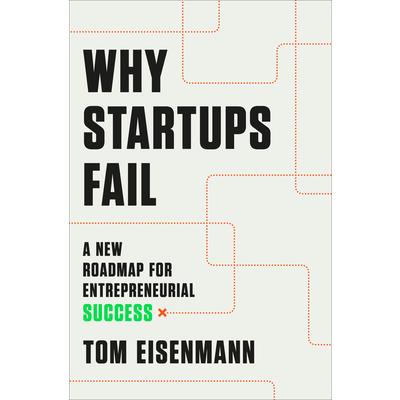
Why Startups Fail
Why Startups FailA New Road Map for Entrepreneurial Success





活動訊息
全館滿$1,200送150點金幣,4月歡慶兒童節,童書、玩具、文具滿1000元再送200點金幣!

內容簡介
If you want your startup to succeed, you need to understand why startups fail.
"Whether you're a first-time founder or looking to bring innovation into a corporate environment, Why Startups Fail is essential reading."--Eric Ries, founder and CEO, LTSE, and New York Times bestselling author of The Lean Startup and The Startup Way Why do startups fail? That question caught Harvard Business School professor Tom Eisenmann by surprise when he realized he couldn't answer it. So he launched a multiyear research project to find out. In Why Startups Fail, Eisenmann reveals his findings: six distinct patterns that account for the vast majority of startup failures. - Bad Bedfellows. Startup success is thought to rest largely on the founder's talents and instincts. But the wrong team, investors, or partners can sink a venture just as quickly.
- False Starts. In following the oft-cited advice to "fail fast" and to "launch before you're ready," founders risk wasting time and capital on the wrong solutions.
- False Promises. Success with early adopters can be misleading and give founders unwarranted confidence to expand.
- Speed Traps. Despite the pressure to "get big fast," hypergrowth can spell disaster for even the most promising ventures.
- Help Wanted. Rapidly scaling startups need lots of capital and talent, but they can make mistakes that leave them suddenly in short supply of both.
- Cascading Miracles. Silicon Valley exhorts entrepreneurs to dream big. But the bigger the vision, the more things that can go wrong. Drawing on fascinating stories of ventures that failed to fulfill their early promise--from a home-furnishings retailer to a concierge dog-walking service, from a dating app to the inventor of a sophisticated social robot, from a fashion brand to a startup deploying a vast network of charging stations for electric vehicles--Eisenmann offers frameworks for detecting when a venture is vulnerable to these patterns, along with a wealth of strategies and tactics for avoiding them. A must-read for founders at any stage of their entrepreneurial journey, Why Startups Fail is not merely a guide to preventing failure but also a roadmap charting the path to startup success.
"Whether you're a first-time founder or looking to bring innovation into a corporate environment, Why Startups Fail is essential reading."--Eric Ries, founder and CEO, LTSE, and New York Times bestselling author of The Lean Startup and The Startup Way Why do startups fail? That question caught Harvard Business School professor Tom Eisenmann by surprise when he realized he couldn't answer it. So he launched a multiyear research project to find out. In Why Startups Fail, Eisenmann reveals his findings: six distinct patterns that account for the vast majority of startup failures. - Bad Bedfellows. Startup success is thought to rest largely on the founder's talents and instincts. But the wrong team, investors, or partners can sink a venture just as quickly.
- False Starts. In following the oft-cited advice to "fail fast" and to "launch before you're ready," founders risk wasting time and capital on the wrong solutions.
- False Promises. Success with early adopters can be misleading and give founders unwarranted confidence to expand.
- Speed Traps. Despite the pressure to "get big fast," hypergrowth can spell disaster for even the most promising ventures.
- Help Wanted. Rapidly scaling startups need lots of capital and talent, but they can make mistakes that leave them suddenly in short supply of both.
- Cascading Miracles. Silicon Valley exhorts entrepreneurs to dream big. But the bigger the vision, the more things that can go wrong. Drawing on fascinating stories of ventures that failed to fulfill their early promise--from a home-furnishings retailer to a concierge dog-walking service, from a dating app to the inventor of a sophisticated social robot, from a fashion brand to a startup deploying a vast network of charging stations for electric vehicles--Eisenmann offers frameworks for detecting when a venture is vulnerable to these patterns, along with a wealth of strategies and tactics for avoiding them. A must-read for founders at any stage of their entrepreneurial journey, Why Startups Fail is not merely a guide to preventing failure but also a roadmap charting the path to startup success.
配送方式
-
台灣
- 國內宅配:本島、離島
-
到店取貨:
 不限金額免運費



-
海外
- 國際快遞:全球
-
港澳店取:


訂購/退換貨須知
加入金石堂 LINE 官方帳號『完成綁定』,隨時掌握出貨動態:


商品運送說明:
- 本公司所提供的產品配送區域範圍目前僅限台灣本島。注意!收件地址請勿為郵政信箱。
- 商品將由廠商透過貨運或是郵局寄送。消費者訂購之商品若無法送達,經電話或 E-mail無法聯繫逾三天者,本公司將取消該筆訂單,並且全額退款。
- 當廠商出貨後,您會收到E-mail出貨通知,您也可透過【訂單查詢】確認出貨情況。
- 產品顏色可能會因網頁呈現與拍攝關係產生色差,圖片僅供參考,商品依實際供貨樣式為準。
- 如果是大型商品(如:傢俱、床墊、家電、運動器材等)及需安裝商品,請依商品頁面說明為主。訂單完成收款確認後,出貨廠商將會和您聯繫確認相關配送等細節。
- 偏遠地區、樓層費及其它加價費用,皆由廠商於約定配送時一併告知,廠商將保留出貨與否的權利。
提醒您!!
金石堂及銀行均不會請您操作ATM! 如接獲電話要求您前往ATM提款機,請不要聽從指示,以免受騙上當!
退換貨須知:
**提醒您,鑑賞期不等於試用期,退回商品須為全新狀態**
-
依據「消費者保護法」第19條及行政院消費者保護處公告之「通訊交易解除權合理例外情事適用準則」,以下商品購買後,除商品本身有瑕疵外,將不提供7天的猶豫期:
- 易於腐敗、保存期限較短或解約時即將逾期。(如:生鮮食品)
- 依消費者要求所為之客製化給付。(客製化商品)
- 報紙、期刊或雜誌。(含MOOK、外文雜誌)
- 經消費者拆封之影音商品或電腦軟體。
- 非以有形媒介提供之數位內容或一經提供即為完成之線上服務,經消費者事先同意始提供。(如:電子書、電子雜誌、下載版軟體、虛擬商品…等)
- 已拆封之個人衛生用品。(如:內衣褲、刮鬍刀、除毛刀…等)
- 若非上列種類商品,均享有到貨7天的猶豫期(含例假日)。
- 辦理退換貨時,商品(組合商品恕無法接受單獨退貨)必須是您收到商品時的原始狀態(包含商品本體、配件、贈品、保證書、所有附隨資料文件及原廠內外包裝…等),請勿直接使用原廠包裝寄送,或於原廠包裝上黏貼紙張或書寫文字。
- 退回商品若無法回復原狀,將請您負擔回復原狀所需費用,嚴重時將影響您的退貨權益。



商品評價