




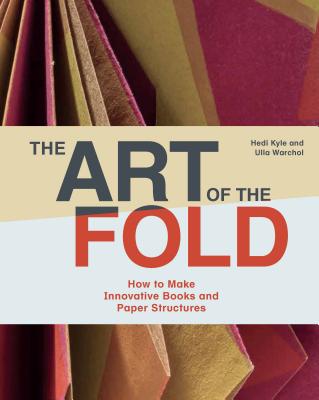
The Art of the Fold
The Art of the Fold




活動訊息
中文書、漫畫輕小說5折起、電子書35元起,全館滿$1,000送100點金幣

內容簡介
"The influential artist Hedi Kyle and renowned architecture graduate Ulla Warchol shows you how to create their unique designs using folding techniques. From creating flag books and fishbones, to blizzards and nesting boxes, you'll gain an invaluable insight into the work of two skilled artists with this fun read! With the help of their thorough instructions and simple illustrations, you'll be on your way to becoming a pro paper crafter in no time at all" - Sew magazine "A wonderful insight into the work of a truly skilled artist" - PaperCrafter The renowned and influential book artist Hedi Kyle shows you step-by-step how to create her unique designs using folding techniques in The Art of the Fold. Bookbinding and paper craft projects include flag books, blizzard books, the fishbone fold, and nesting boxes. Written by the doyenne of artists' books, Hedi Kyle, The Art of the Fold is a wonderful insight into the work of a truly skilled artist. Hedi will show you how to bind a book and fold paper to create over 35 of her cut-fold book designs. The book is beautifully illustrated with Hedi's finished works of art. An excerpt from the book:
'I can still remember the thrill I experienced when my first folded book structure emerged from my fingers - how eager I was to explore its possibilities and to share it with whoever was interested. The Flag Book, as I now call it, is a simple accordion and has interlocking pages oriented in opposite directions. Little did I know that this simple structure would have legs and be the catalyst for the next forty-plus years of thinking about and making books. The common perception of the book today is fairly straightforward: a series of pages organized around a spine and protected on either side by two covers. This format allows for easy access, storage and retrieval of information. Yet what happens when the book is stripped away of centuries of preconceptions and is allowed to reveal something else: playfulness, utility, invention? Expanding the notion of the book is what the structures in the following chapters of The Art of the Fold attempt to do. Exploring its tactile, sculptural form, primarily through folding methods, the book as a structural object is celebrated while content is considered in a new and unconventional way. My range in this medium has always been broad. In part this is due to my introduction to the world of bookbinding and some chance encounters. In the 1970s in New York City, the art and craft of hand bookbinding and papermaking were experiencing an unprecedented revival. I was fortunate to arrive in the city at just this moment. With an art-school background and an impulse to make things, I was naturally drawn to pursue this new opportunity. The Center for Book Arts, the famous forerunner of so many centers yet to come, was located in a small storefront just down the street from where I lived on the Lower East Side of Manhattan. Under the direction of founder Richard Minsky, it had a radical mission: to push concept, materials, printing and making of artist books in a new direction. When Richard dared me to teach at the Center one evening a week, I was hooked. My career as a book conservator and a book artist has now spanned over 45 years. As head conservator at the American Philosophical Society in Philadelphia, I've had the opportunity to handle some of the rarest volumes and manuscripts in the world. I have also dealt with decrepit books, torn maps and countless curiosities discovered in stacks and archives. All were endless sources for ideas and provided a springboard for a departure from tradition. Leading book-arts workshops around the world and a 25 year tenure teaching in the graduate program for Book Arts and Printmaking at the University of the Arts in Philadelphia have shown me, in retrospect, that the more I taught, the more it propelled me to experiment and develop my ideas. The many students I have had over the years were always my biggest inspiratio
'I can still remember the thrill I experienced when my first folded book structure emerged from my fingers - how eager I was to explore its possibilities and to share it with whoever was interested. The Flag Book, as I now call it, is a simple accordion and has interlocking pages oriented in opposite directions. Little did I know that this simple structure would have legs and be the catalyst for the next forty-plus years of thinking about and making books. The common perception of the book today is fairly straightforward: a series of pages organized around a spine and protected on either side by two covers. This format allows for easy access, storage and retrieval of information. Yet what happens when the book is stripped away of centuries of preconceptions and is allowed to reveal something else: playfulness, utility, invention? Expanding the notion of the book is what the structures in the following chapters of The Art of the Fold attempt to do. Exploring its tactile, sculptural form, primarily through folding methods, the book as a structural object is celebrated while content is considered in a new and unconventional way. My range in this medium has always been broad. In part this is due to my introduction to the world of bookbinding and some chance encounters. In the 1970s in New York City, the art and craft of hand bookbinding and papermaking were experiencing an unprecedented revival. I was fortunate to arrive in the city at just this moment. With an art-school background and an impulse to make things, I was naturally drawn to pursue this new opportunity. The Center for Book Arts, the famous forerunner of so many centers yet to come, was located in a small storefront just down the street from where I lived on the Lower East Side of Manhattan. Under the direction of founder Richard Minsky, it had a radical mission: to push concept, materials, printing and making of artist books in a new direction. When Richard dared me to teach at the Center one evening a week, I was hooked. My career as a book conservator and a book artist has now spanned over 45 years. As head conservator at the American Philosophical Society in Philadelphia, I've had the opportunity to handle some of the rarest volumes and manuscripts in the world. I have also dealt with decrepit books, torn maps and countless curiosities discovered in stacks and archives. All were endless sources for ideas and provided a springboard for a departure from tradition. Leading book-arts workshops around the world and a 25 year tenure teaching in the graduate program for Book Arts and Printmaking at the University of the Arts in Philadelphia have shown me, in retrospect, that the more I taught, the more it propelled me to experiment and develop my ideas. The many students I have had over the years were always my biggest inspiratio
配送方式
-
台灣
- 國內宅配:本島、離島
-
到店取貨:
 不限金額免運費



-
海外
- 國際快遞:全球
-
港澳店取:


訂購/退換貨須知
加入金石堂 LINE 官方帳號『完成綁定』,隨時掌握出貨動態:

商品運送說明:
- 本公司所提供的產品配送區域範圍目前僅限台灣本島。注意!收件地址請勿為郵政信箱。
- 商品將由廠商透過貨運或是郵局寄送。消費者訂購之商品若無法送達,經電話或 E-mail無法聯繫逾三天者,本公司將取消該筆訂單,並且全額退款。
- 當廠商出貨後,您會收到E-mail出貨通知,您也可透過【訂單查詢】確認出貨情況。
- 產品顏色可能會因網頁呈現與拍攝關係產生色差,圖片僅供參考,商品依實際供貨樣式為準。
- 如果是大型商品(如:傢俱、床墊、家電、運動器材等)及需安裝商品,請依商品頁面說明為主。訂單完成收款確認後,出貨廠商將會和您聯繫確認相關配送等細節。
- 偏遠地區、樓層費及其它加價費用,皆由廠商於約定配送時一併告知,廠商將保留出貨與否的權利。
提醒您!!
金石堂及銀行均不會請您操作ATM! 如接獲電話要求您前往ATM提款機,請不要聽從指示,以免受騙上當!
退換貨須知:
**提醒您,鑑賞期不等於試用期,退回商品須為全新狀態**
-
依據「消費者保護法」第19條及行政院消費者保護處公告之「通訊交易解除權合理例外情事適用準則」,以下商品購買後,除商品本身有瑕疵外,將不提供7天的猶豫期:
- 易於腐敗、保存期限較短或解約時即將逾期。(如:生鮮食品)
- 依消費者要求所為之客製化給付。(客製化商品)
- 報紙、期刊或雜誌。(含MOOK、外文雜誌)
- 經消費者拆封之影音商品或電腦軟體。
- 非以有形媒介提供之數位內容或一經提供即為完成之線上服務,經消費者事先同意始提供。(如:電子書、電子雜誌、下載版軟體、虛擬商品…等)
- 已拆封之個人衛生用品。(如:內衣褲、刮鬍刀、除毛刀…等)
- 若非上列種類商品,均享有到貨7天的猶豫期(含例假日)。
- 辦理退換貨時,商品(組合商品恕無法接受單獨退貨)必須是您收到商品時的原始狀態(包含商品本體、配件、贈品、保證書、所有附隨資料文件及原廠內外包裝…等),請勿直接使用原廠包裝寄送,或於原廠包裝上黏貼紙張或書寫文字。
- 退回商品若無法回復原狀,將請您負擔回復原狀所需費用,嚴重時將影響您的退貨權益。


商品評價