




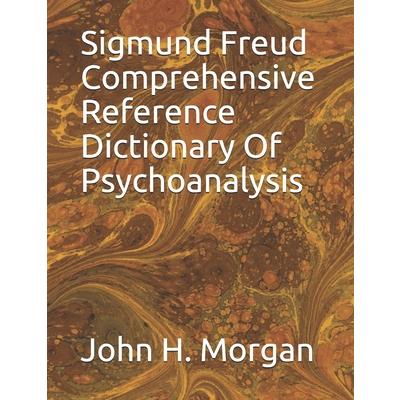
Sigmund Freud Comprehensive Reference Dictionary Of Psychoanalysis
Sigmund Freud Comprehensive Reference Dictionary Of Psychoanalysis



-
9折 2538元
2820元 - 認購希望書包,幫助弱勢孩童上學不中斷!
-
 預計最高可得金幣125點
?
可100%折抵
預計最高可得金幣125點
?
可100%折抵
活動加倍另計 -
HAPPY GO享100累1點 4點抵1元 折抵無上限
-
分類:英文書>人文社科>教育/教養>教育心理研究追蹤? 追蹤分類後,您會在第一時間收到分類新品通知。
- 作者: John H,Morgan 追蹤 ? 追蹤作者後,您會在第一時間收到作者新書通知。
- 出版社: Wyndham Hall Press 追蹤 ? 追蹤出版社後,您會在第一時間收到出版社新書通知。
- 出版日:2021/05/31

內容簡介
The uniqueness of this Comprehensive Reference Dictionary is that, even though there are many professionals practicing psychoanalysis as well as publishing books and articles in the field, this work is based exclusively on the 24 primary texts of the recognized founder of psychoanalysis, Sigmund Freud, M.D. Several dictionaries of relevance to psychoanalysis as a field of research and practice presently populate the market and though the quality of these efforts vary from excellent to acceptable, they all draw from a variety of sources, practitioners, researchers, and scholars but none limit themselves to a delineation of terms and concepts employed exclusively in the collected works of Freud himself. This definition is dedicated solely to a delineation of the terms and concepts developed and employed by Freud himself and used in his published works. That these terms and concepts became common nomenclature by subsequent generations of practitioners is of no relevance to our efforts here.Given the magnitude of this undertaking in creating an encyclopedic dictionary for practitioners in the broad field of psychoanalysis, I am determined to lay out a rational and logical fashion the methodology I have employed in gathering and sorting the materials included in this work. By doing so, I hope both to demonstrate the fundamental comprehensiveness of my approach and to validate the integrity I attempt to embody in this undertaking. This reference dictionary aspires to be a great resource for scholars, students, and practitioners of psychoanalysis who desire to have in one location a comprehensive delineation of every term and concept developed by Freud himself appearing in his published works. Every term and concept employed by Freud in any of his 24 volumes in his Collected Works is listed including the volume or volumes in which they appear and the page number for their exact location for referencing by the user of this dictionary.For 20 years I taught a doctoral-level seminar in the international summer program of Oxford University and have held a professorial appointment in research psychopathology specializing in the classical and modern schools of psychotherapy with special emphasis on the psychopathology of personality disorders. Presently, I am Editor-in-Chief of a scholarly journal in this field, The Behavioral Mind: A Journal in Personality Disorders, which fosters a balance between the APA's Diagnostic and Statistical Manual of Mental Disorders and humanistic psychology embodied in the work of the Third Force led by Abraham Maslow and Carl Rogers, among others. In the development of this major reference work based on the Standard Edition of the Collected Works of Sigmund Freud, I have taken my inspiration from the creators of the great dictionaries of the English language, particular Dr. Samuel Johnson's essay on lexicography prefacing his landmark epic in commencing the first comprehensive Dictionary of the English Language (August, 1747, titled "Plan of a Dictionary of the English Language"), and that of the creators of the Oxford Dictionary of the English Language (launched May, 1860).In 1950, Nandor Fodor and Frank Gaynor, with a Preface by Theodor Reik, produced the first dictionary of psychoanalytic terms which were gleaned from over 60 primary source materials written by Freud himself. Though a monumental undertaking and an early key reference source for psychoanalysts, the book, titled, Freud: Dictionary of Psychoanalysis (N.Y.: The Philosophical Library, Inc., 1950), had some disappointing shortcomings in that it often defined the terms by only reference the book title from which it was selected but without a page reference. When bibliographic referencing was attempted, it never provided more than the chapter in which the word being defined was to be found.
配送方式
-
台灣
- 國內宅配:本島、離島
-
到店取貨:
 不限金額免運費



-
海外
- 國際快遞:全球
-
港澳店取:


訂購/退換貨須知
加入金石堂 LINE 官方帳號『完成綁定』,隨時掌握出貨動態:

商品運送說明:
- 本公司所提供的產品配送區域範圍目前僅限台灣本島。注意!收件地址請勿為郵政信箱。
- 商品將由廠商透過貨運或是郵局寄送。消費者訂購之商品若無法送達,經電話或 E-mail無法聯繫逾三天者,本公司將取消該筆訂單,並且全額退款。
- 當廠商出貨後,您會收到E-mail出貨通知,您也可透過【訂單查詢】確認出貨情況。
- 產品顏色可能會因網頁呈現與拍攝關係產生色差,圖片僅供參考,商品依實際供貨樣式為準。
- 如果是大型商品(如:傢俱、床墊、家電、運動器材等)及需安裝商品,請依商品頁面說明為主。訂單完成收款確認後,出貨廠商將會和您聯繫確認相關配送等細節。
- 偏遠地區、樓層費及其它加價費用,皆由廠商於約定配送時一併告知,廠商將保留出貨與否的權利。
提醒您!!
金石堂及銀行均不會請您操作ATM! 如接獲電話要求您前往ATM提款機,請不要聽從指示,以免受騙上當!
退換貨須知:
**提醒您,鑑賞期不等於試用期,退回商品須為全新狀態**
-
依據「消費者保護法」第19條及行政院消費者保護處公告之「通訊交易解除權合理例外情事適用準則」,以下商品購買後,除商品本身有瑕疵外,將不提供7天的猶豫期:
- 易於腐敗、保存期限較短或解約時即將逾期。(如:生鮮食品)
- 依消費者要求所為之客製化給付。(客製化商品)
- 報紙、期刊或雜誌。(含MOOK、外文雜誌)
- 經消費者拆封之影音商品或電腦軟體。
- 非以有形媒介提供之數位內容或一經提供即為完成之線上服務,經消費者事先同意始提供。(如:電子書、電子雜誌、下載版軟體、虛擬商品…等)
- 已拆封之個人衛生用品。(如:內衣褲、刮鬍刀、除毛刀…等)
- 若非上列種類商品,均享有到貨7天的猶豫期(含例假日)。
- 辦理退換貨時,商品(組合商品恕無法接受單獨退貨)必須是您收到商品時的原始狀態(包含商品本體、配件、贈品、保證書、所有附隨資料文件及原廠內外包裝…等),請勿直接使用原廠包裝寄送,或於原廠包裝上黏貼紙張或書寫文字。
- 退回商品若無法回復原狀,將請您負擔回復原狀所需費用,嚴重時將影響您的退貨權益。



商品評價